
Brick, stone, and other masonry materials are incredibly durable, but they are not completely rigid. Exterior walls and masonry features naturally respond to temperature changes, moisture, structural movement, and seasonal conditions. When there is no room for this movement to occur safely, stress can build within the masonry.
That is where expansion and movement joints become important.
For homeowners throughout Ottawa, Kanata, Stittsville, Orléans, Manotick, Rockland, Arnprior, Kemptville, Brockville, and surrounding Eastern Ontario communities, understanding these joints can help explain why some cracks develop even when the masonry itself appears strong.
We believe movement joints should be treated as part of the overall masonry system rather than an isolated detail. Properly designed and maintained joints help reduce unwanted cracking and support long-term exterior performance.
What Is a Masonry Expansion Joint?
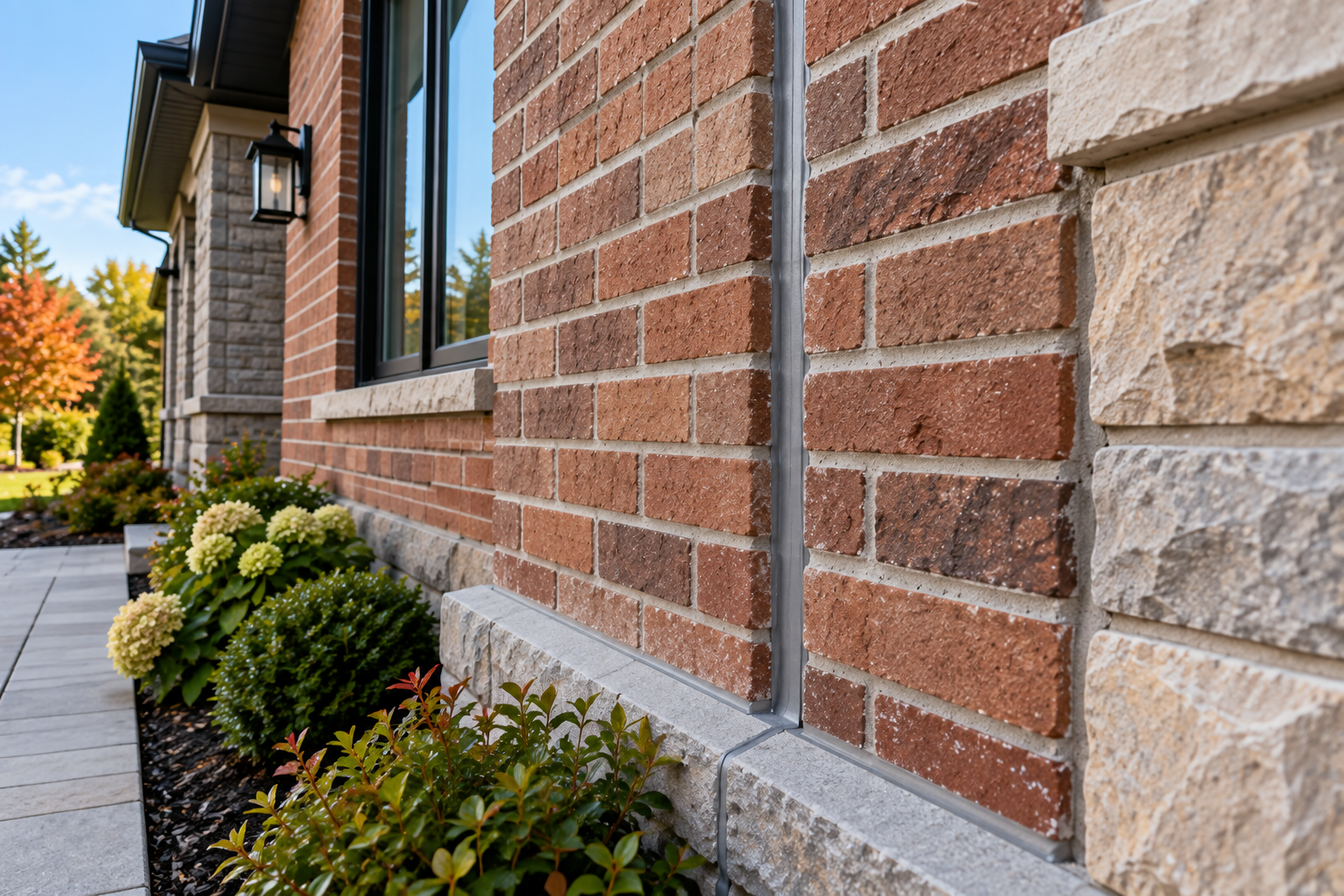
An expansion or movement joint is a planned separation within a masonry system that allows sections to move slightly without forcing that movement into the surrounding brick or stone.
These joints may be found in:
- Long brick walls
- Large façades
- Masonry transitions
- Areas near structural openings
- Changes in building materials
The purpose is simple: create controlled areas where movement can occur.
Why Masonry Moves
Exterior masonry responds to several conditions.
Movement may be influenced by:
- Temperature changes
- Moisture
- Building settlement
- Seasonal expansion and contraction
- Different materials moving at different rates
Throughout Ottawa and Kanata, exterior walls can experience substantial temperature variation between summer and winter.
That seasonal movement makes properly designed joints particularly important.
What Happens When Movement Has Nowhere to Go?
When a masonry wall expands or contracts without adequate accommodation, stress may appear as:
- Vertical cracks
- Horizontal cracks
- Cracks near corners
- Cracks around windows and doors
- Separation between materials
These cracks often develop in predictable areas where stress concentrates.
Professional assessment can determine whether the issue is related to movement, deteriorated mortar, structural conditions, or another cause.
Expansion Joints Are Different from Random Cracks
A properly designed movement joint is intentional.
A random crack is not.
This distinction matters because homeowners sometimes try to treat both conditions the same way.
Filling a movement-related crack with rigid mortar may not solve the problem if the wall continues expanding and contracting.
The repair strategy should reflect why the crack formed in the first place.
Different Materials Move Differently
Homes often combine multiple materials, such as:
- Brick
- Natural stone
- Concrete
- Siding
- Metal
- Wood
These materials do not all expand and contract at the same rate.
Transitions between them can therefore become stress points.
Professional masonry work should consider how these materials interact rather than focusing only on the brick or stone itself.
Door and Window Areas Are Common Stress Points
Openings interrupt the continuity of masonry walls.
This makes areas around windows and doors common places for movement-related cracking.
Homeowners may notice cracks:
- Near upper corners
- Along vertical joints
- At material transitions
Properties throughout Stittsville, Orléans, and Rockland can benefit from early evaluation of these patterns before they become more extensive.
Movement Joints Need Maintenance Too
Even properly installed joints can deteriorate over time.
The flexible material within them may eventually:
- Crack
- Pull away
- Harden
- Separate
- Lose adhesion
Once that happens, water may enter the joint or movement may no longer be accommodated effectively.
Routine inspection helps identify aging joints before surrounding masonry becomes affected.
Moisture Can Make Joint Problems Worse
A failed movement joint can create a direct pathway for water.
This becomes particularly important before winter.
Moisture that enters the joint can freeze and contribute to deterioration around the surrounding masonry.
Homes throughout Manotick, Arnprior, and Kemptville experience the same freeze-thaw conditions that make moisture management important across all exterior masonry systems.
Why Mortar Should Not Always Be Used in Movement Joints
Mortar is rigid compared with flexible joint materials.
If a location is designed to accommodate movement, filling it with rigid mortar may prevent the joint from performing as intended.
The appropriate material depends on the construction and purpose of the joint.
This is one reason professional diagnosis is important before attempting repairs.
Cracks Near Expansion Joints Deserve Attention
If masonry is cracking beside an existing movement joint, the joint itself may no longer be functioning properly.
Possible causes include:
- Failed joint material
- Improper original installation
- Excessive movement
- Moisture-related deterioration
Professional assessment can help determine whether restoring the joint will help protect the surrounding masonry.
Older Buildings May Have Different Construction Details
Established homes throughout Ottawa and Brockville may have been built using different masonry practices than newer properties.
Some older walls may have limited movement detailing, while others may have joints that have been repaired incorrectly over time.
When restoring older masonry, understanding the original construction is important.
The goal should be to work with the building rather than unintentionally restricting natural movement.
Proper Joint Placement Matters During New Masonry Work
When building new masonry features, joint planning should be considered from the beginning.
This is especially important for:
- Long walls
- Large façades
- Major additions
- Masonry transitions
Proper planning can help reduce future cracking and maintenance.
Quality masonry construction is not only about choosing attractive materials. It is also about understanding how those materials will behave over time.
Final Thoughts
Expansion and movement joints are small details with an important job.
They help exterior masonry accommodate natural movement caused by temperature, moisture, and building conditions. When these joints are missing, damaged, or repaired incorrectly, unwanted cracking may develop elsewhere in the masonry.
For homeowners throughout Ottawa, Kanata, Stittsville, Orléans, Manotick, Rockland, Arnprior, Kemptville, Brockville, and surrounding Eastern Ontario communities, maintaining movement joints is one more way to protect long-term masonry performance.
Professional Masonry Joint and Crack Repair
Our team provides professional masonry crack repair, movement joint maintenance, brick restoration, repointing, chimney repair, natural stonework, retaining walls, masonry steps, patios, walkways, parging, foundation masonry, and complete exterior masonry services throughout Ottawa and surrounding communities.
Phone: (613) 212-5995
Email: info@onecutbrickandstone.com
Contact us today to schedule a professional masonry consultation. We can assess cracking, deteriorated joints, and surrounding masonry and recommend a practical repair designed to support the long-term durability and appearance of your property.