
Masonry caps may seem like small finishing details, but they play an important role in protecting walls, pillars, retaining walls, and other outdoor masonry features from moisture. When a cap becomes loose, cracked, or separated from the structure beneath it, water can begin entering areas that were intended to remain protected.
For homeowners throughout Ottawa, Kanata, Stittsville, Orléans, Manotick, Rockland, Arnprior, Kemptville, Brockville, and surrounding Eastern Ontario communities, damaged caps should be repaired before repeated freezing and thawing make the problem worse.
We recommend addressing loose or deteriorated caps early because a localized repair is usually easier than restoring a larger section of water-damaged masonry.
What Are Masonry Caps?
Caps are installed across the top of masonry features such as:
- Retaining walls
- Garden walls
- Entrance pillars
- Porch columns
- Seat walls
- Decorative stone features
They help finish the structure visually while directing rain and melting snow away from the masonry below.
When they are properly installed and maintained, caps provide valuable protection against moisture.
Why Do Masonry Caps Become Loose?
Cap movement can develop for several reasons.
Common causes include:
- Deteriorated mortar
- Freeze-thaw cycles
- Water infiltration
- Seasonal movement
- Impact
- Age
- Poor previous repairs
Sometimes only one cap moves. In other situations, several joints across a wall may begin failing at the same time.
Water Is Often the Biggest Concern
A loose cap can allow water to enter beneath it.
Once moisture reaches the masonry below, it may affect:
- Mortar joints
- Brick
- Natural stone
- Supporting masonry
During winter, trapped moisture may freeze and expand.
Properties throughout Ottawa, Kanata, and Stittsville experience repeated freeze-thaw cycles, which can gradually increase existing damage.
Cracked Joints Between Caps Should Not Be Ignored
Even when the caps themselves remain intact, mortar joints between them can deteriorate.
Homeowners may notice:
- Open joints
- Missing mortar
- Cracks
- Loose joint material
These openings create easy paths for rain and snowmelt.
Professional repointing or resetting may help restore the protective function of the wall.
Retaining Wall Caps Need Regular Inspection
Retaining walls are already exposed to moisture from the surrounding landscape.
Loose caps can add another point where water enters.
Homeowners throughout Orléans, Manotick, and Rockland should inspect retaining wall tops for:
- Movement
- Cracking
- Failed joints
- Water staining
Keeping the upper surface in good condition can help protect the entire retaining wall system.
Entrance Pillar Caps Are Highly Exposed
Pillar caps often sit completely exposed to weather.
They may receive:
- Direct rainfall
- Snow accumulation
- Ice
- Wind-driven moisture
A cracked pillar cap can allow water to move into the brick or stone below.
Over time, homeowners may notice staining, deteriorated mortar, or loose masonry around the pillar.
Loose Caps Can Become a Safety Concern
A cap that moves when touched should not be ignored.
Loose masonry near:
- Walkways
- Driveways
- Entrances
- Patios
can become increasingly unstable.
Professional repair helps restore both appearance and stability.
Why Surface Caulking Is Not Always Enough
Applying sealant around a loose cap may temporarily reduce visible gaps, but it does not necessarily correct the underlying problem.
If the cap has lost proper support or the mortar underneath has failed, the unit may need to be removed and reset.
The repair should address why the cap became loose rather than simply hiding the joint.
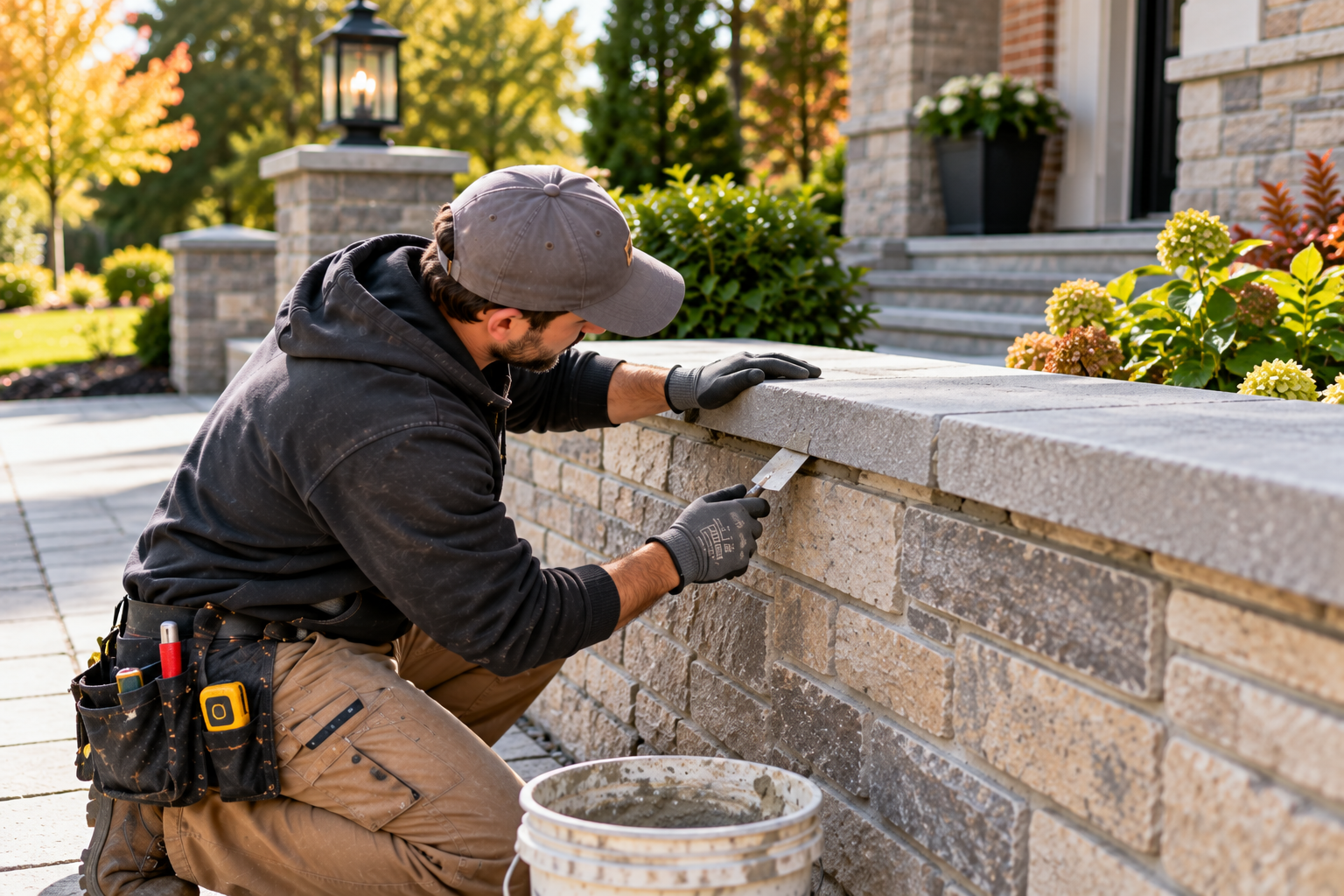
Proper Resetting Makes a Difference
Professional resetting may involve:
- Removing the unstable cap.
- Cleaning failed material.
- Evaluating the supporting surface.
- Preparing fresh compatible bedding material.
- Reinstalling and aligning the cap.
- Restoring surrounding joints.
Proper preparation improves the durability of the repair.
Matching Replacement Caps Matters
If a cap is too damaged to reuse, replacement should complement the existing masonry.
Professionals consider:
- Colour
- Thickness
- Texture
- Dimensions
- Edge profile
This is particularly important for decorative entrances and landscape features where mismatched materials can stand out.
Water Staining Can Reveal a Problem
Dark streaks or white mineral deposits beneath caps may indicate repeated moisture movement.
Staining alone does not always mean serious damage, but when it appears with loose masonry or failed joints, the area should be assessed.
Cleaning the stain without correcting the moisture source may only provide a temporary cosmetic improvement.
Seasonal Inspections Help Catch Problems Early
Homeowners can include masonry caps in regular property inspections.
Before winter, check:
- Pillar tops
- Retaining walls
- Garden walls
- Porch columns
- Seat walls
Look for any change in alignment or joint condition.
Early repairs can help prevent water from reaching deeper parts of the masonry.
Why Local Climate Matters
Eastern Ontario masonry must withstand substantial seasonal changes.
Homes throughout Ottawa, Kanata, Stittsville, Orléans, Manotick, Rockland, Arnprior, Kemptville, and Brockville regularly experience:
- Rain
- Snow
- Ice
- Freeze-thaw cycles
- Summer heat
A small loose cap may endure dozens of moisture and temperature changes during a single winter.
That makes preventative maintenance especially valuable.
Final Thoughts
Loose masonry caps are more than an appearance issue. They can create openings that allow water into retaining walls, pillars, columns, and other masonry features.
Addressing damaged caps before winter can help protect the structure beneath them, preserve curb appeal, and reduce the chance of more extensive repairs later.
Professional resetting, repointing, or replacement can restore both stability and moisture protection while keeping the masonry looking clean and well maintained.
Professional Masonry Cap and Wall Repair
Our team provides professional masonry cap repair and replacement, retaining walls, entrance pillars, brick restoration, repointing, natural stonework, masonry steps, patios, walkways, chimney repair, parging, foundation masonry, and complete exterior masonry services throughout Ottawa and surrounding Eastern Ontario communities.
Phone: (613) 212-5995
Email: info@onecutbrickandstone.com
Contact us today to schedule a professional masonry consultation. We can assess loose or cracked caps, deteriorated joints, and surrounding masonry and recommend a practical repair designed to protect the appearance, strength, and long-term performance of your property.