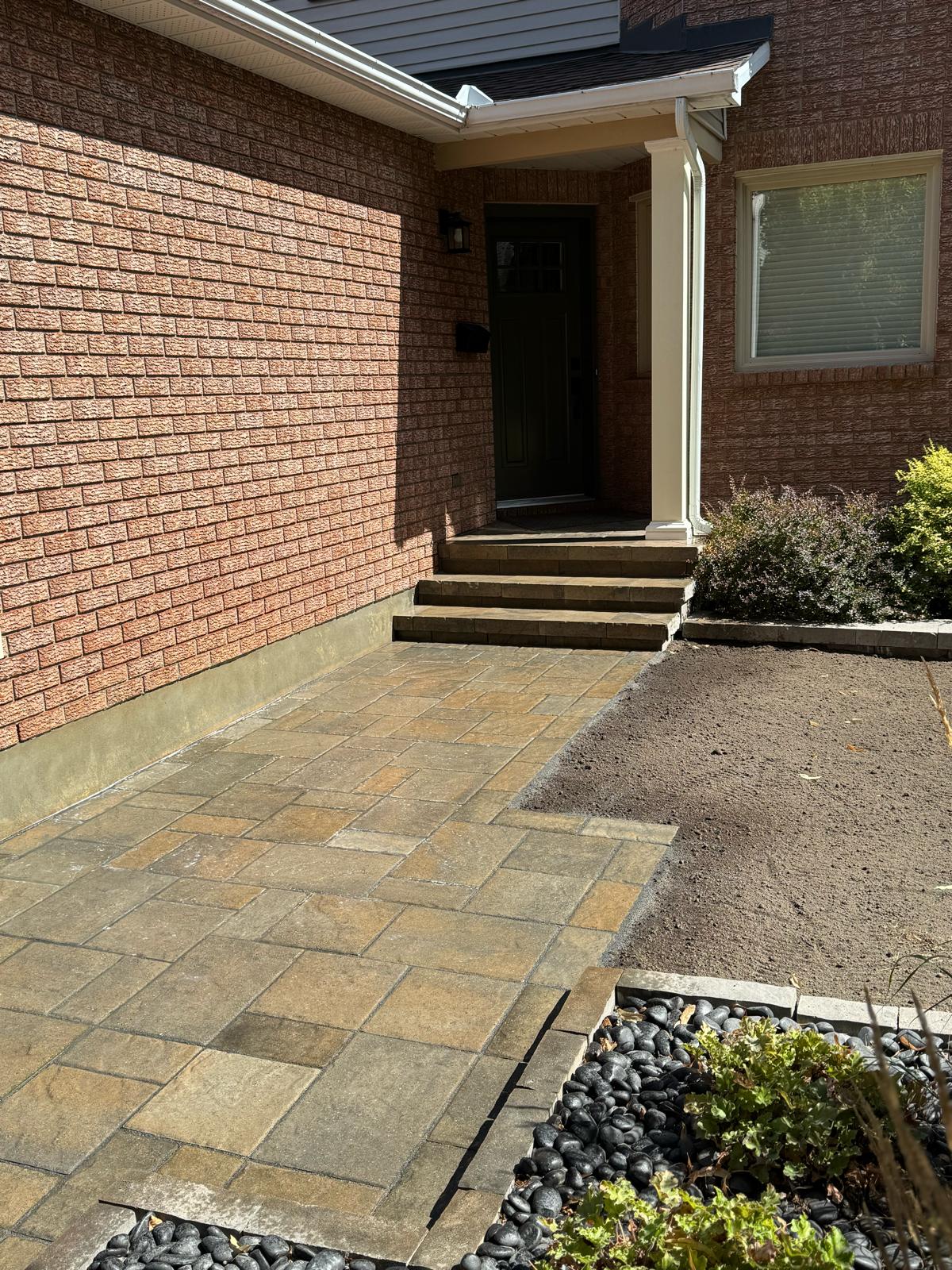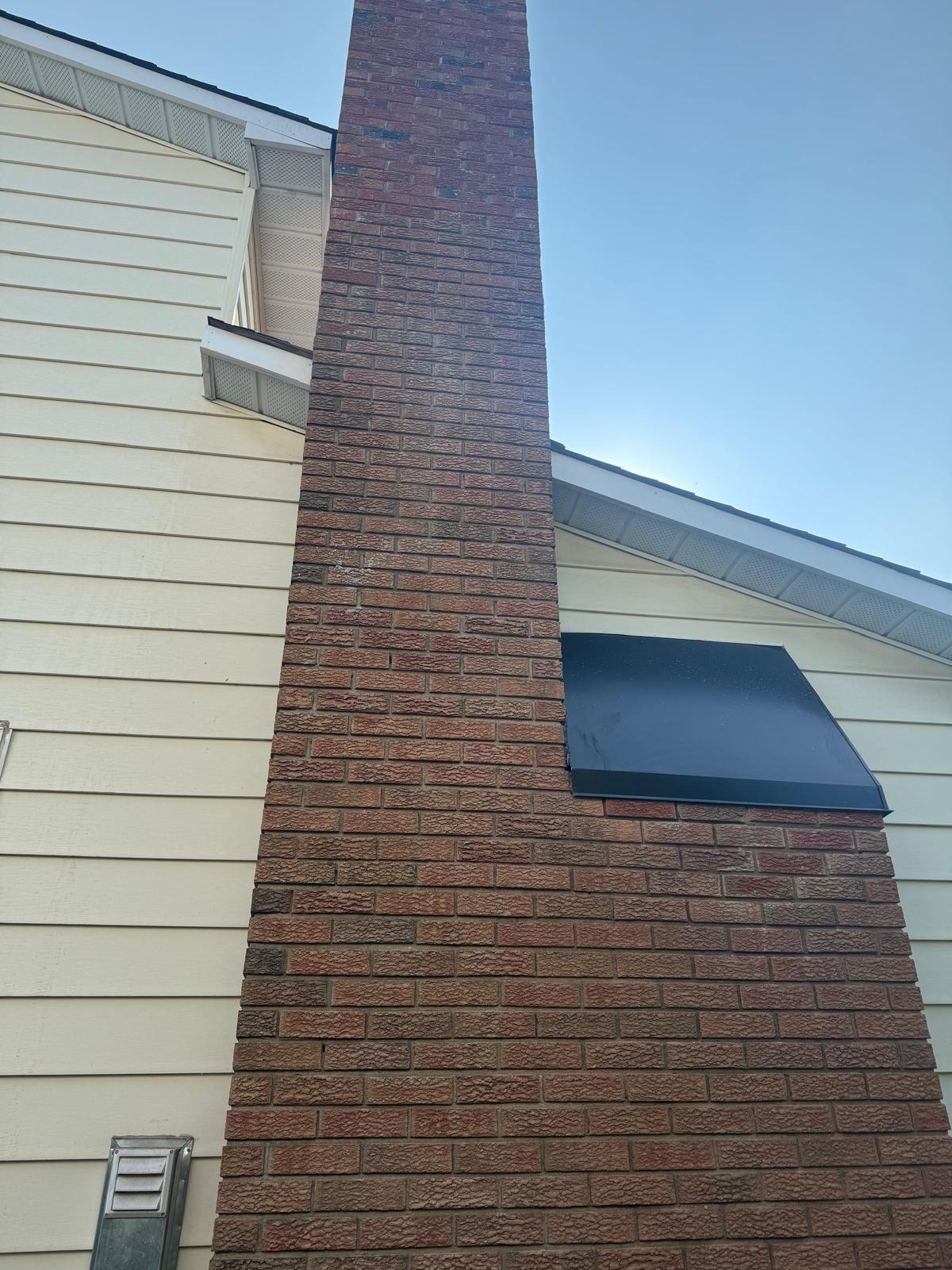

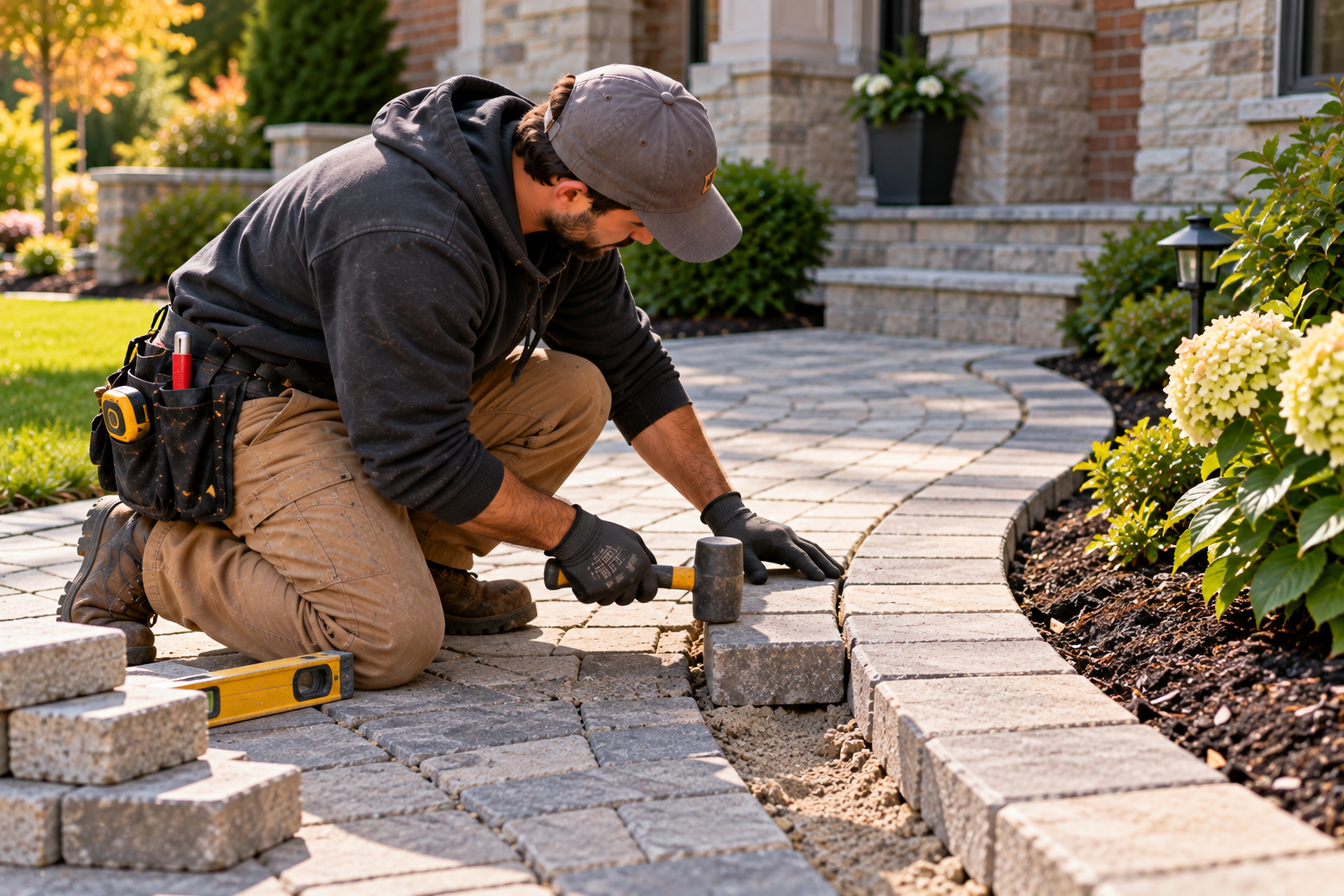
Walkways are among the most frequently used masonry features around a home. They connect driveways, entrances, patios, gardens, and side yards while helping guide foot traffic safely through the property. Because they are used every day and sit directly at ground level, walkway edges are especially vulnerable to moisture, shifting soil, freeze-thaw cycles, and repeated seasonal movement.
For homeowners throughout Ottawa, Kanata, Stittsville, Orléans, Manotick, Rockland, Arnprior, Kemptville, Brockville, and surrounding Eastern Ontario communities, damaged walkway edges should be repaired before winter conditions make existing movement worse.
We recommend addressing cracked or loose edges early because a localized repair can often help preserve the rest of the walkway while improving both safety and curb appeal.
Why Walkway Edges Deteriorate
The outer edges of a walkway often receive less structural support than the centre.
Over time, movement can develop because of:
- Soil settlement
- Water runoff
- Freeze-thaw cycles
- Failed edge restraints
- Landscaping pressure
- Poor drainage
- Repeated foot traffic
Once the edge begins shifting, nearby pavers or stone may gradually move as well.
Small Cracks Can Grow Quickly
A minor crack may seem harmless during warmer weather.
However, moisture can enter the opening and freeze once temperatures drop.
Repeated freezing and thawing may cause:
- Wider cracks
- Loose pavers
- Chipped stone
- Uneven edges
- Surface separation
Homes throughout Ottawa and Kanata experience these temperature changes every year.
Early repair can help prevent a small problem from becoming a larger walkway restoration.
Loose Edge Pavers Can Become a Trip Hazard
When pavers or stone units move outward, the walkway may become uneven.
This creates potential concerns around:
- Front entrances
- Side paths
- Garden walkways
- Patio connections
- Driveway transitions
Snow can hide these uneven areas completely during winter.
Professional interlock or masonry repair helps restore a more stable walking surface.
Edge Restraints Play an Important Role
Interlock systems often rely on edge restraints to keep pavers contained.
If the restraint shifts or fails, outer pavers may begin moving away from the main surface.
Signs include:
- Widening joints
- Loose border pavers
- Curved or uneven edges
- Small gaps
Repairing the edge restraint can help prevent movement from spreading farther into the walkway.
Water Runoff Can Weaken Walkway Edges
Water moving along or beneath a walkway can gradually wash away supporting material.
This may lead to:
- Settlement
- Low spots
- Loose edges
- Erosion
Properties throughout Stittsville, Orléans, and Rockland should be checked after heavy rainfall to see whether water is flowing across or beside walkway edges.
Correcting drainage may be just as important as resetting the masonry.
Landscaping Can Contribute to Movement
Tree roots, expanding garden beds, and shifting soil can place pressure on walkway borders.
Homeowners should watch for:
- Roots lifting pavers
- Soil pushing against edges
- Mulch or earth covering border units
Landscaping and masonry should work together rather than compete for space.
Natural Stone Walkways Need Similar Attention
Stone walkways can develop cracked or loose edge pieces just like interlock systems.
Professional repair may include:
- Resetting stone
- Rebuilding the base
- Replacing damaged units
- Restoring mortar joints
The correct approach depends on the type of walkway and the cause of the movement.
Why Surface Patching Is Not Enough
Simply filling a crack does not solve the problem if the edge has shifted because of base failure or erosion.
Professional repair focuses on:
- Stability beneath the surface
- Proper alignment
- Drainage
- Edge support
This helps create a longer-lasting result.
Repairing Early Helps Protect the Rest of the Walkway
Once the outer edge becomes unstable, neighbouring units may begin shifting.
A localized repair today may prevent:
- Larger settlement
- Wider separation
- Full walkway reconstruction
Preventative maintenance is often the most practical option when the rest of the walkway remains in good condition.
Final Thoughts
Cracked or loose walkway edges should not be ignored, especially before winter.
For homeowners throughout Ottawa, Kanata, Stittsville, Orléans, Manotick, Rockland, Arnprior, Kemptville, Brockville, and surrounding Eastern Ontario communities, early repair can help preserve safety, drainage, curb appeal, and the long-term stability of the entire walkway.
Addressing edge movement before freeze-thaw conditions intensify can keep repairs more manageable and protect the existing masonry investment.
Professional Walkway and Masonry Repair
Our team provides professional walkway repair, interlock resetting, natural stone repair, masonry steps, retaining walls, patios, brick restoration, repointing, chimney repair, parging, foundation masonry, and complete exterior masonry services throughout Ottawa and surrounding communities.
Phone: (613) 212-5995
Email: info@onecutbrickandstone.com
Contact us today to schedule a professional masonry consultation. We can assess cracked or loose walkway edges, identify the cause of the movement, and recommend a practical repair designed to restore safety, appearance, and long-term performance.