
Brick exteriors are admired for their durability, classic appearance, and ability to withstand changing weather conditions. However, many homeowners are unaware that certain brick wall systems contain small openings designed to help manage moisture.
These openings are called weep holes, and although they may appear insignificant, they can play an important role in keeping a masonry wall functioning properly.
For homeowners throughout Ottawa, Kanata, Stittsville, Orléans, Manotick, Rockland, Arnprior, Kemptville, Brockville, and surrounding Eastern Ontario communities, understanding how weep holes work can help prevent unnecessary moisture problems and protect the long-term condition of exterior brickwork.
At One Cut Brick & Stone, we believe effective masonry maintenance involves more than repairing visible cracks. It also means understanding the details that allow a masonry system to manage water properly.
What Are Brick Weep Holes?
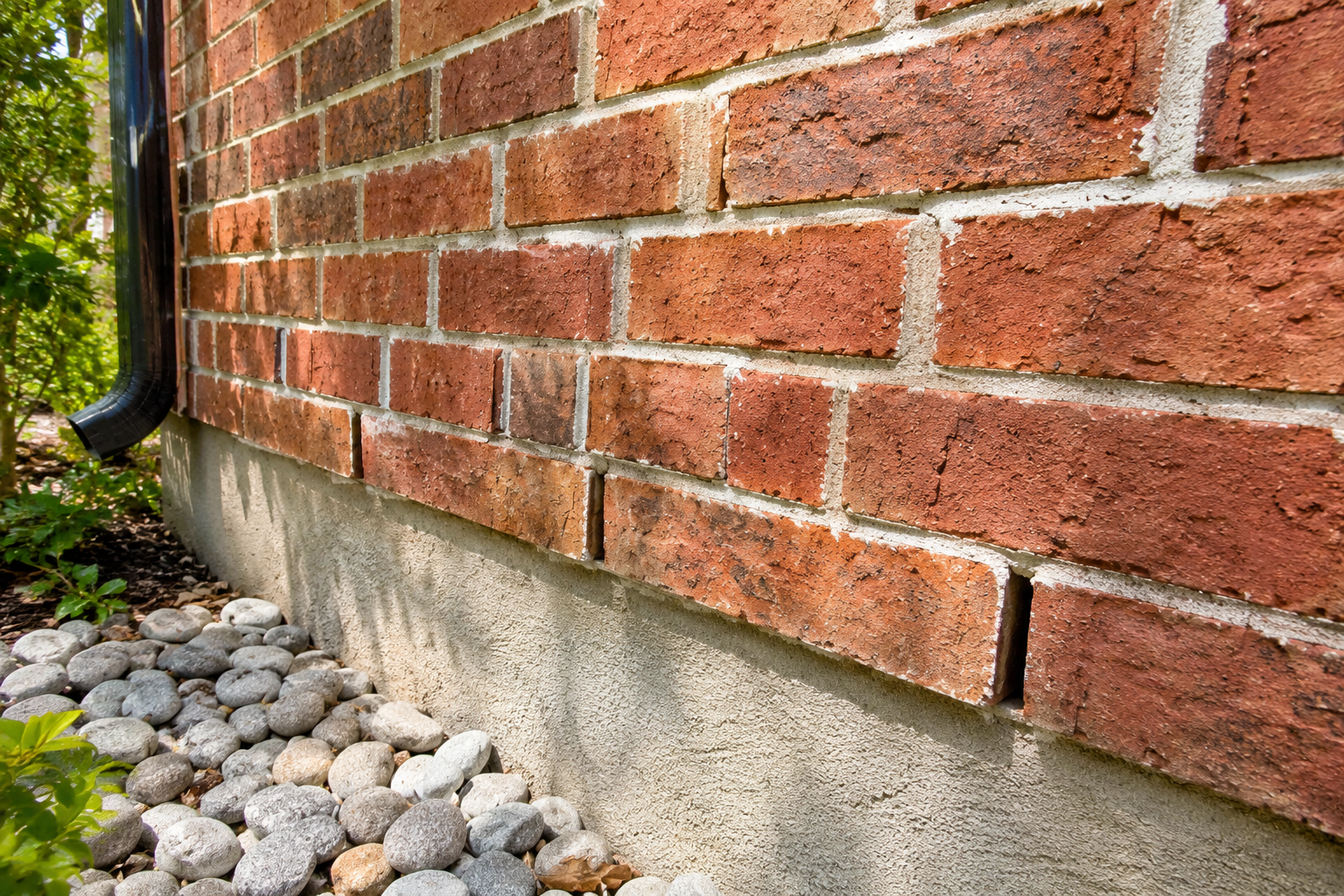
Weep holes are small openings intentionally incorporated into certain masonry wall systems, commonly near the bottom of brick veneer sections and above some openings.
Their primary purpose is to allow moisture collected within the wall’s drainage cavity to escape.
Brick is durable, but it is not completely waterproof. Wind-driven rain can penetrate some brick and mortar assemblies.
Properly designed drainage systems manage this moisture by directing it toward flashing and allowing it to exit through weep holes.
Without functioning drainage pathways, moisture may remain trapped inside vulnerable areas of the wall.
Why Brick Walls Need Moisture Drainage
Exterior brickwork faces regular exposure to:
- Rain and wind
- Melting snow
- Seasonal humidity
- Freeze-thaw cycles
- Temperature fluctuations
Homes throughout Ottawa and Kanata experience considerable weather variation throughout the year.
When water enters a properly designed brick veneer assembly, drainage components help direct it outward rather than allowing excessive moisture to accumulate.
Weep holes are one part of that system.
They work together with appropriate flashing, cavity construction, and other water-management details.
What Can Block a Weep Hole?
Weep holes may become obstructed by several materials.
Common examples include:
- Mortar droppings
- Dirt and debris
- Insect nesting material
- Landscaping materials
- Improper sealant application
- Paint or previous repairs
Sometimes homeowners unintentionally block these openings because they mistake them for construction defects.
Although an open gap in brickwork may appear unfinished, an intentional weep hole should not simply be filled with mortar.
Why Blocking Weep Holes Can Create Problems
When drainage openings become obstructed, water may have difficulty leaving the wall cavity.
Depending on the construction and extent of the blockage, moisture accumulation can contribute to deterioration.
Potential concerns include:
- Persistent dampness
- Efflorescence
- Mortar deterioration
- Moisture staining
- Freeze-thaw damage
- Problems affecting adjacent building materials
Not every blocked opening will immediately cause visible damage, but maintaining intended drainage pathways is important.
Ottawa’s Freeze-Thaw Cycles Increase the Risk
Eastern Ontario winters can be particularly demanding on masonry.
Water that remains in vulnerable areas may freeze as temperatures drop.
When moisture freezes, it expands. Repeated freezing and thawing can place stress on masonry materials already affected by cracks or deterioration.
For homes throughout Stittsville, Orléans, and Rockland, proper moisture management is therefore an important part of preventative masonry maintenance.
Functional drainage openings help reduce unnecessary water accumulation in wall systems designed to use them.
White Staining May Indicate Moisture Movement
One sign homeowners sometimes notice is a white powdery deposit on the surface of brick.
This is commonly called efflorescence.
Efflorescence develops when moisture carries soluble salts through masonry and leaves mineral deposits behind as the water evaporates.
Although the staining itself does not necessarily indicate structural damage, recurring deposits can suggest ongoing moisture movement.
When white staining appears near the base of a brick wall, homeowners should consider having the surrounding drainage and masonry conditions evaluated.
Watch for Deteriorating Mortar Near the Base of Walls
Mortar joints near the lower portions of exterior walls may receive significant moisture exposure.
Homeowners should look for:
- Crumbling mortar
- Open joints
- Cracks
- Loose brick
- Surface deterioration
These conditions can have several causes, including prolonged moisture exposure.
Professional masonry assessment can help determine whether repointing, brick replacement, drainage correction, or another repair is appropriate.
Why Weep Holes Should Not Be Filled with Mortar
A common misunderstanding is that every opening in a brick wall should be sealed.
However, intentional drainage openings serve a purpose.
Filling weep holes with mortar can interfere with the wall’s intended moisture-management system.
Before sealing any opening, homeowners should determine whether it is an actual defect or a designed drainage feature.
We recommend professional evaluation when there is uncertainty.
Can Insects Enter Through Weep Holes?
Homeowners sometimes worry that drainage openings will allow insects to enter.
This concern is understandable, particularly when the openings are located near landscaping.
Appropriate weep-hole protection products may help discourage insect entry while maintaining drainage and ventilation functions where required.
The important consideration is that protective materials must not obstruct the opening’s intended purpose.
Completely sealing the hole is generally not the correct solution.
Landscaping Can Affect Masonry Drainage
Landscaping is another factor worth considering.
Garden beds, mulch, and soil should not be allowed to cover intended drainage openings.
When landscaping is installed too high against a brick façade, it can interfere with moisture management and increase exposure near the wall base.
For homeowners throughout Manotick, Kemptville, and Arnprior, maintaining appropriate separation between landscaping materials and masonry drainage details can help protect the exterior.
How Do Homeowners Identify Weep Holes?
In many brick veneer systems, weep holes appear as small vertical openings in mortar joints.
They may be located:
- Near the bottom of exterior brickwork
- Above certain windows
- Above doors
- At other locations where cavity drainage is required
However, masonry construction varies.
Not every wall contains the same drainage arrangement, and some older buildings use different construction methods.
Homeowners should avoid assuming that every small opening is a weep hole.
Professional assessment can help identify its purpose.
What If the Brick Wall Already Shows Moisture Damage?
When visible deterioration has developed, restoring drainage may be only one part of the repair.
A professional masonry assessment may consider:
- Brick condition
- Mortar joints
- Flashing
- Drainage openings
- Water runoff
- Existing cracks
- Previous repairs
If damaged bricks or deteriorated mortar are present, professional restoration may also be necessary.
The objective is to correct the source of moisture problems while preserving as much sound masonry as possible.
Older Ottawa Homes May Have Different Wall Systems
Established properties throughout Ottawa, Brockville, and Arnprior may contain brick walls constructed using different techniques and materials.
Some older masonry walls are solid or multi-wythe assemblies rather than modern drained brick veneer systems.
These walls may manage moisture differently and may not contain conventional weep holes.
For this reason, masonry repairs should always reflect the actual construction of the building.
Applying modern assumptions to every older wall can result in inappropriate repairs.
Professional Masonry Maintenance Protects Long-Term Value
Well-maintained brickwork contributes significantly to a property’s appearance and durability.
Professional maintenance can help preserve:
- Exterior brick surfaces
- Mortar joints
- Drainage details
- Architectural character
- Overall curb appeal
Small construction details often make a substantial difference in how masonry performs over time.
Keeping drainage pathways functional is one example of preventative maintenance that homeowners may otherwise overlook.
When Should Homeowners Contact a Masonry Professional?
Professional assessment is recommended when homeowners notice:
- Persistent moisture staining
- Recurring efflorescence
- Spalling brick
- Deteriorated mortar
- Unexplained water infiltration
- Blocked drainage openings
- Loose masonry
A qualified professional can assess the visible conditions and determine whether further investigation or repair is necessary.
Homeowners should avoid probing deeply into wall cavities or removing mortar without first identifying the construction details.
Final Thoughts
Brick weep holes may be small, but they can perform an important function in masonry walls designed with cavity drainage systems.
By allowing collected moisture to escape, they help the wall manage rainwater and reduce unnecessary moisture accumulation.
For homeowners throughout Ottawa, Kanata, Stittsville, Orléans, Manotick, Rockland, Arnprior, Kemptville, Brockville, and surrounding Eastern Ontario communities, understanding these details can support better exterior maintenance decisions.
The key is recognizing that not every opening in brickwork represents damage. Some are essential components of a properly functioning masonry system.
Maintaining these features, together with sound mortar, effective flashing, and appropriate drainage, helps protect the appearance and durability of exterior brickwork.
Professional Brick and Masonry Repair in Ottawa
At One Cut Brick & Stone, we provide professional masonry services throughout Ottawa and surrounding Eastern Ontario communities.
Whether your property requires brick restoration, repointing, masonry repair, chimney repair, natural stonework, retaining walls, masonry steps, interlock patios, walkways, parging, or foundation masonry, our team is ready to help.
We assess visible masonry deterioration, identify potential moisture-related concerns, and recommend practical solutions suited to your property’s condition.
Phone: (613) 212-5995
Email: info@onecutbrickandstone.com
Contact One Cut Brick & Stone today to schedule a professional masonry consultation and help protect the beauty, durability, and long-term value of your home.