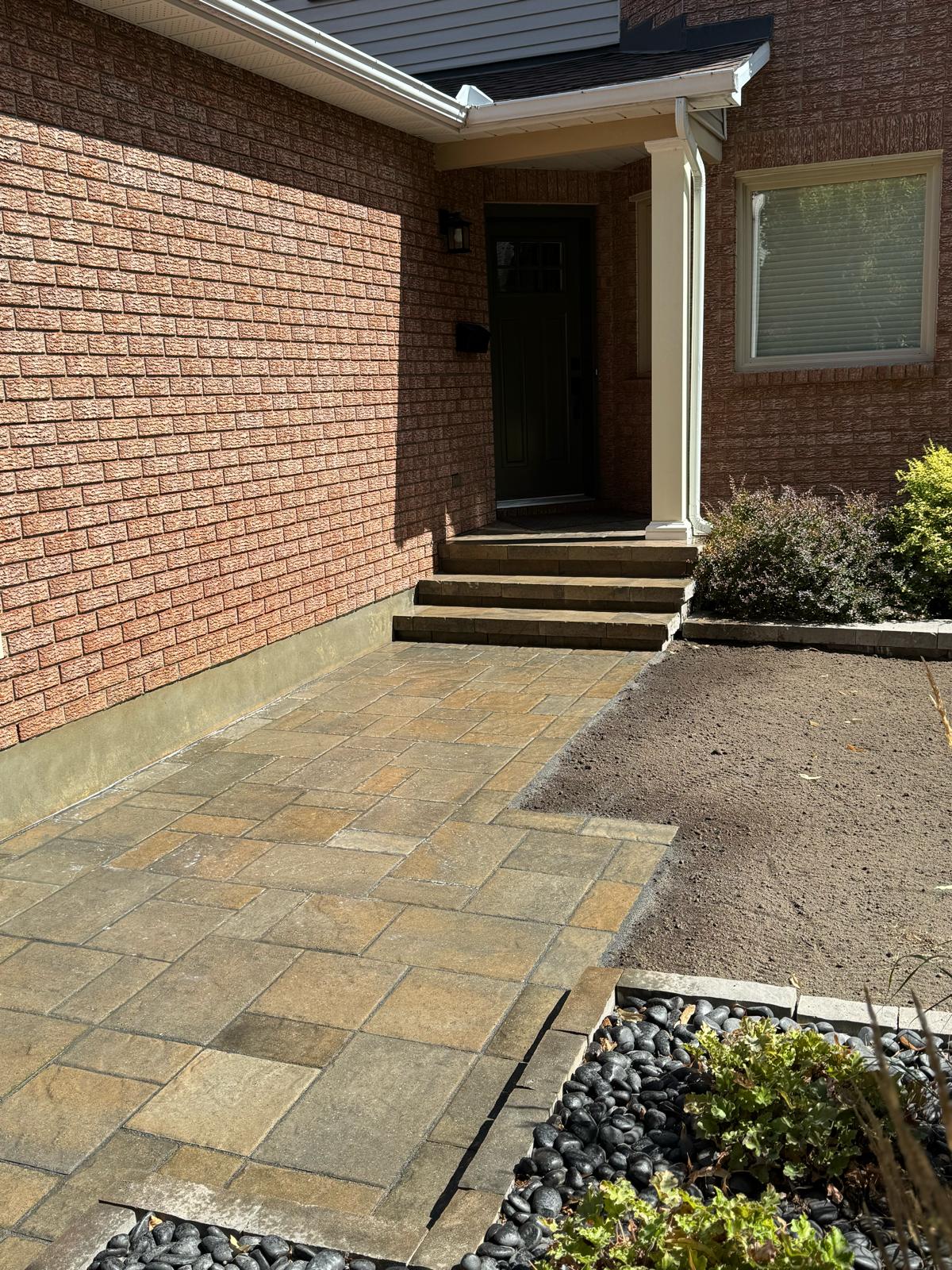


Retaining walls are a critical structural feature for many homes across Ottawa, Kanata, Stittsville, Orléans, Manotick, Rockland, Arnprior, Kemptville, and Brockville. While they are often seen as landscaping elements, retaining walls play an essential role in managing soil pressure, controlling water flow, and protecting property foundations.
However, one of the most common issues we encounter is retaining wall failure caused by poor drainage. Many retaining walls are built without proper water management systems, leading to structural problems within just a few seasons.
We regularly repair and rebuild retaining walls throughout Eastern Ontario and see firsthand how drainage issues can compromise even well-built structures. This guide explains how drainage affects retaining walls and what homeowners should watch for to prevent long-term damage.
Why Drainage Is Critical for Retaining Walls
Retaining walls are designed to hold back soil — but they must also manage water.
When water accumulates behind a wall:
- Pressure increases significantly
- Soil becomes heavier and unstable
- Structural stress builds over time
In Orléans and Rockland, where moisture levels can fluctuate, retaining wall drainage becomes especially important.
The Science Behind Water Pressure
Water creates what is known as hydrostatic pressure. This pressure pushes against the back of the retaining wall.
Without proper drainage:
- Walls begin to lean forward
- Cracks develop
- Structural failure becomes likely
In Kanata and Stittsville, many retaining wall issues can be traced back to inadequate drainage systems during initial installation.
Common Signs of Drainage Problems
Homeowners should look for early warning signs such as:
- Water pooling near the wall
- Soil erosion behind the wall
- Bulging or leaning sections
- Cracks forming between blocks or stones
- Efflorescence (white residue on masonry)
In Ottawa and Arnprior, these signs often appear after heavy rainfall or spring thaw.
Why Retaining Walls Fail Without Drainage
Improper drainage is the leading cause of retaining wall failure.
Common installation mistakes include:
- No drainage stone behind the wall
- Lack of weeping systems
- Poor grading
- Compacting soil instead of using proper backfill
We frequently rebuild retaining walls in Brockville and Kemptville that failed within a few years due to these issues.
The Role of Excavation in Drainage
Proper excavation allows drainage systems to function effectively.
It ensures:
- Adequate depth for drainage layers
- Stable base for the wall
- Controlled water movement
In Manotick and Rockland, excavation is especially important due to varying soil conditions and elevation changes.
Drainage Stone and Backfill Systems
Professional retaining wall construction includes drainage stone placed behind the wall.
This system:
- Allows water to flow freely
- Reduces pressure buildup
- Prevents soil saturation
In Ottawa and Kanata, we see significant performance differences between walls built with proper drainage stone and those built with compacted soil.
Grading and Surface Water Control
Surface water must be directed away from the retaining wall.
Proper grading:
- Prevents water from pooling
- Reduces soil erosion
- Protects the wall structure
In Stittsville and Orléans, improper grading often leads to recurring water-related issues.
Retaining Walls and Foundation Protection
Retaining walls often work together with the home’s foundation.
When drainage fails:
- Water may redirect toward the home
- Foundation moisture increases
- Structural risks develop
Homes in Kemptville and Arnprior benefit from integrated drainage planning that protects both retaining walls and foundations.
Repair vs Replacement of Retaining Walls
Not all retaining walls can be repaired.
Repair May Be Possible When:
- Damage is minor
- Drainage can be corrected
- Structure remains stable
Replacement Is Necessary When:
- The wall is significantly leaning
- Base failure has occurred
- Drainage was never installed
We often see full replacements required in Rockland and Brockville due to long-term drainage neglect.
Long-Term Benefits of Proper Drainage
When retaining walls are built with proper drainage:
- Structural stability improves
- Lifespan increases
- Maintenance is reduced
- Water-related damage is minimized
Homes across Ottawa, Kanata, and Stittsville benefit from retaining walls designed to manage both soil and water effectively.
Why Professional Masonry Matters
Retaining walls are structural systems, not simple landscaping features.
Professional masonry ensures:
- Proper excavation and base preparation
- Correct drainage installation
- Long-term structural performance
In Ottawa’s climate, shortcuts during installation almost always lead to failure.
Preventing Future Retaining Wall Issues
Homeowners can prevent issues by:
- Monitoring drainage around the property
- Addressing early signs of movement
- Scheduling professional assessments
- Avoiding surface-level fixes
Proactive maintenance reduces long-term costs and protects property value.
Final Thoughts: Building Retaining Walls That Handle Ottawa’s Climate
Retaining walls are only as strong as their drainage system. In Eastern Ontario’s freeze-thaw environment, water management is just as important as structural design.
Homeowners across Ottawa, Kanata, Stittsville, Orléans, Manotick, Rockland, Arnprior, Kemptville, and Brockville benefit most from retaining walls built with proper drainage, excavation, and professional masonry techniques.
Call to Action
For professional retaining wall construction and repair, drainage solutions, masonry repair, patios, sidewalks, steps, interlock installation, chimney repair, and foundation masonry services across Ottawa and surrounding areas:
Phone: (613) 212-5995
Email: info@onecutbrickandstone.com
Contact us to schedule a professional consultation and ensure your retaining wall is built to last.