
Retaining walls are one of the most important structural landscape features found across Ottawa, Kanata, Stittsville, Orléans, Manotick, Rockland, Arnprior, Kemptville, and Brockville. While many homeowners focus on the appearance of the wall itself, the real strength of a retaining wall depends on something hidden behind it — the drainage system.
We regularly repair retaining walls throughout Eastern Ontario that have failed due to poor water management rather than poor materials. In many cases, homeowners invest in beautiful stone or interlock retaining walls only to experience leaning, cracking, bulging, or complete structural collapse because drainage was overlooked during installation.
Ottawa’s climate creates significant moisture pressure behind retaining walls. Freeze-thaw cycles, heavy rainfall, snowmelt, and shifting soil conditions all place enormous stress on these systems. Without proper drainage, even well-built walls eventually fail.
This guide explains why retaining wall drainage matters, how water pressure damages masonry systems, and how professional installation protects retaining walls long-term.
Why Retaining Walls Experience Constant Pressure
Retaining walls are designed to hold back soil and stabilize elevation changes.
However, they must also resist:
- Hydrostatic water pressure
- Soil expansion
- Moisture saturation
- Freeze-thaw movement
In Kanata and Stittsville, clay-rich soil absorbs and retains water, creating additional pressure behind walls. In Orléans and Rockland, fluctuating moisture levels increase long-term structural stress.
Without proper drainage, pressure builds continuously behind the wall.
What Is Hydrostatic Pressure?
Hydrostatic pressure occurs when water accumulates behind a retaining wall.
As moisture builds:
- Soil becomes heavier
- Water pushes against the structure
- Pressure increases dramatically
In Ottawa and Arnprior, hydrostatic pressure is one of the leading causes of retaining wall failure.
Many homeowners do not realize how destructive trapped water can become over time.
Common Signs of Drainage Failure
Retaining walls often show warning signs before major failure occurs.
Homeowners should watch for:
- Leaning walls
- Bulging sections
- Cracks in masonry
- Water pooling nearby
- Soil erosion behind the wall
- Separation between stones or blocks
In Manotick and Kemptville, these signs often appear after periods of heavy rain or spring thaw.
Early intervention prevents much larger structural repairs later.
Why Water Is More Dangerous Than Soil
Many homeowners assume soil pressure is the main threat to retaining walls. In reality, trapped water is far more destructive.
Water:
- Increases overall weight behind the wall
- Weakens the base foundation
- Expands during freezing
- Accelerates structural movement
In Stittsville and Brockville, water-related movement is one of the most common causes of wall instability.
Drainage systems are designed specifically to relieve this pressure.
Proper Drainage Starts During Excavation
Drainage planning begins before the wall is even built.
Professional excavation:
- Creates space for drainage systems
- Removes unstable soil
- Allows proper grading
In Rockland and Kanata, insufficient excavation often leads to drainage problems that develop years later.
Retaining wall performance depends heavily on proper preparation beneath the surface.
Drainage Stone Is Critical
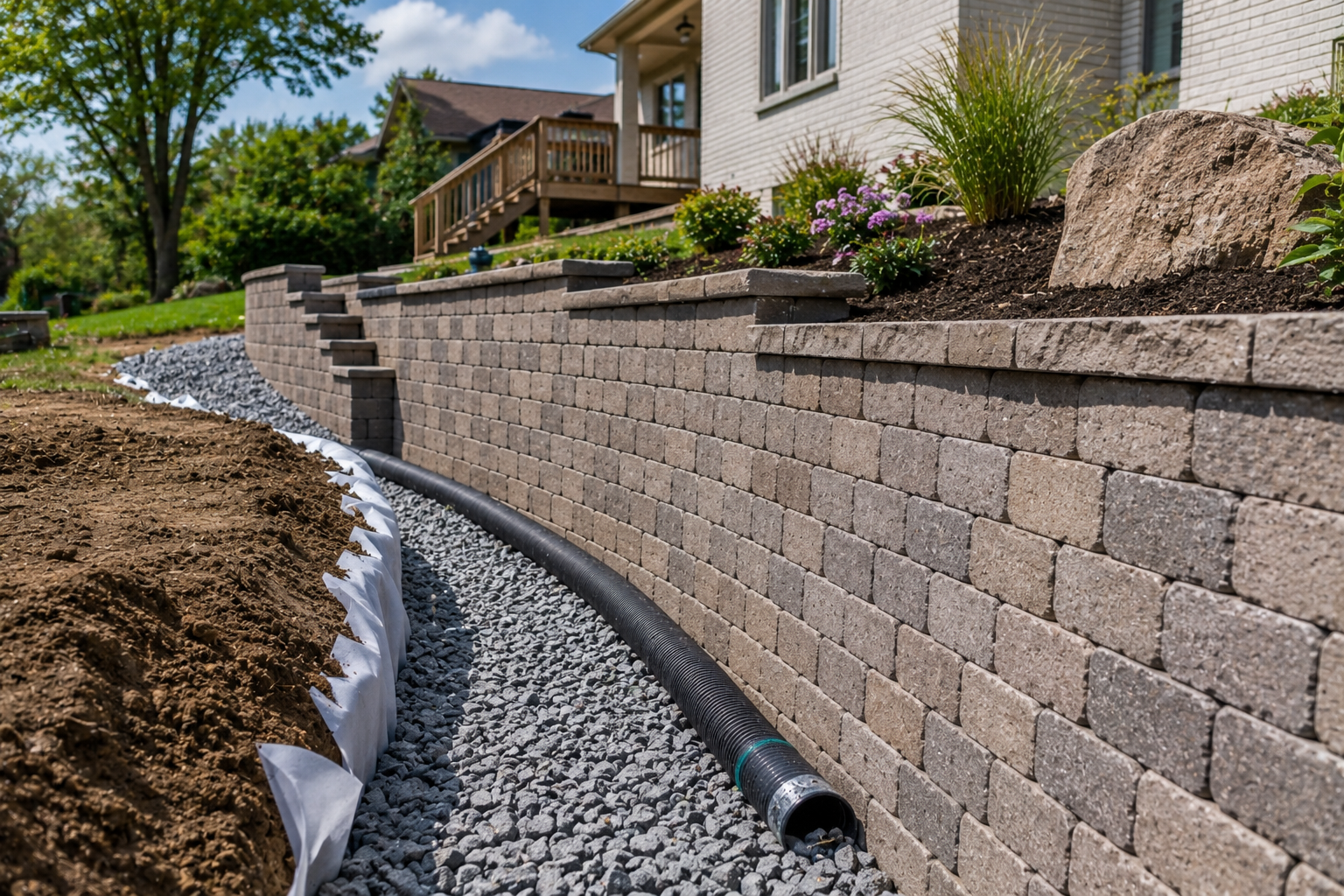
One of the most important parts of retaining wall construction is drainage stone placed behind the wall.
Drainage stone:
- Allows water to move freely
- Reduces pressure buildup
- Prevents soil saturation
In Ottawa and Orléans, walls without proper drainage stone often experience early structural movement.
Compacted soil alone cannot manage moisture effectively.
Backfill Materials Matter
The wrong backfill materials can trap water behind the wall.
Professional retaining wall systems use:
- Free-draining granular materials
- Proper compaction methods
- Engineered backfill layers
In Arnprior and Kemptville, improper backfill is a major reason retaining walls begin leaning after only a few seasons.
Correct materials protect the structure long-term.
Why Freeze-Thaw Cycles Accelerate Wall Failure
Ottawa’s freeze-thaw environment creates repeated structural stress.
When trapped water freezes:
- It expands inside the soil
- Pressure increases behind the wall
- Structural movement develops
When thawing occurs:
- Soil shifts unevenly
- The wall settles unpredictably
Homes across Kanata, Stittsville, and Brockville experience severe retaining wall stress during seasonal transitions.
Drainage systems reduce freeze-thaw damage significantly.
Retaining Wall Bases Must Stay Stable
Water does not only affect the wall itself — it also impacts the foundation beneath it.
Excess moisture can:
- Weaken the base
- Cause settling
- Create uneven pressure distribution
In Ottawa and Rockland, failing retaining walls often show signs of both drainage failure and base instability.
Strong foundations and proper drainage work together as one system.
Why Cheap Retaining Walls Fail Faster
We frequently repair retaining walls where shortcuts were taken during installation.
Common shortcuts include:
- Minimal excavation
- No drainage stone
- Poor backfill materials
- Weak compaction
- Missing drainage outlets
While these shortcuts lower initial costs, they often lead to:
- Leaning walls
- Cracking
- Water damage
- Full reconstruction
Homes across Eastern Ontario benefit most from proper structural installation from the beginning.
Repair vs Replacement of Retaining Walls
Repair May Be Possible When:
- Drainage problems are minor
- Structural movement is limited
- Damage is localized
Replacement May Be Necessary When:
- Leaning becomes severe
- Structural stability is compromised
- Drainage systems completely failed
Professional evaluation determines the safest and most cost-effective solution.
Why Professional Masonry Contractors Matter
Professional masonry contractors understand how water affects retaining wall systems over time.
Experienced installation ensures:
- Proper excavation
- Correct drainage design
- Stable foundations
- Long-term structural integrity
In Ottawa’s climate, drainage is just as important as the wall materials themselves.
Long-Term Benefits of Proper Drainage Systems
A properly drained retaining wall provides:
- Long-term structural stability
- Reduced maintenance
- Better erosion control
- Increased lifespan
- Improved property value
In competitive markets like Ottawa, Kanata, and Stittsville, properly built retaining walls improve both functionality and curb appeal.
Preventing Future Retaining Wall Problems
Homeowners can reduce future risks by:
- Monitoring drainage around the property
- Addressing water pooling early
- Scheduling regular inspections
- Repairing small cracks quickly
Preventative maintenance greatly extends retaining wall lifespan.
Final Thoughts: Water Management Determines Wall Performance
Most retaining wall failures begin with poor drainage long before visible structural damage appears. Proper excavation, drainage stone, backfill systems, and moisture management are essential for long-term performance in Ottawa’s demanding climate.
Homeowners across Ottawa, Kanata, Stittsville, Orléans, Manotick, Rockland, Arnprior, Kemptville, and Brockville benefit most from professionally built retaining walls designed to manage both soil and water pressure effectively.
Call to Action
For professional retaining wall construction, drainage systems, masonry repair, patios, walkways, interlock installation, chimney repair, foundation masonry, and full masonry services across Ottawa and surrounding areas:
Phone: (613) 212-5995
Email: info@onecutbrickandstone.com
Contact us today to schedule a professional consultation and build retaining walls designed to withstand Ottawa’s climate.