
As temperatures begin to drop across Eastern Ontario, homeowners naturally start preparing their properties for colder weather. Gutters are cleaned, outdoor furniture is stored, gardens are prepared, and heating systems receive attention. One area that should also be included in seasonal maintenance is exterior masonry.
Brick, natural stone, mortar, steps, chimneys, retaining walls, and interlock surfaces spend the entire winter exposed to moisture, snow, ice, and repeated temperature changes. Small areas of deterioration that seem insignificant during warmer weather can become more vulnerable once water enters and begins freezing.
For homeowners throughout Ottawa, Kanata, Stittsville, Orléans, Manotick, Rockland, Arnprior, Kemptville, Brockville, and surrounding Eastern Ontario communities, checking masonry before winter provides an opportunity to identify problems while they are still manageable.
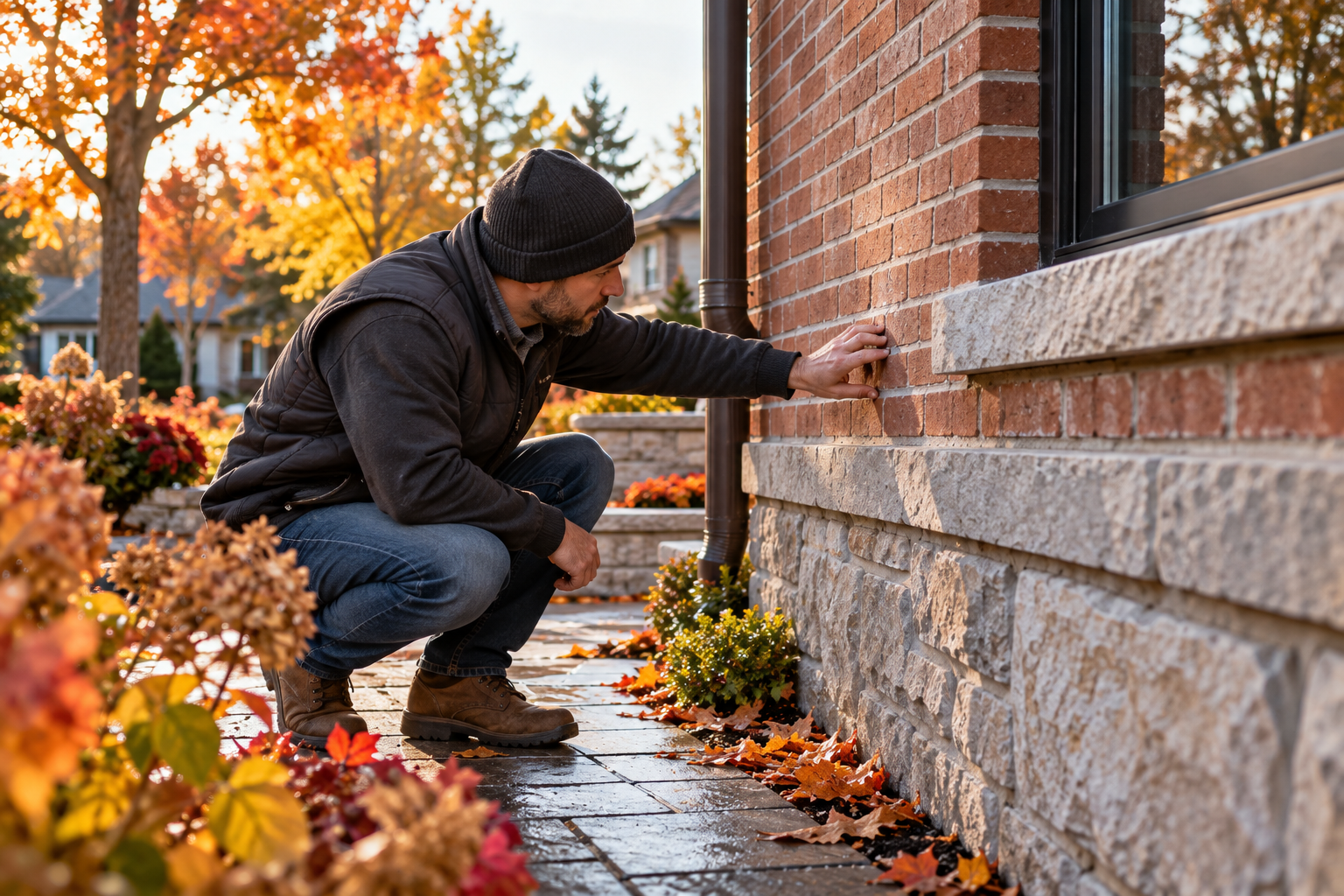
We recommend paying particular attention to cracks, loose masonry, drainage, mortar joints, and horizontal surfaces. A relatively simple inspection can reveal areas that may benefit from professional masonry repair before another demanding winter.
Start with the Mortar Joints
Mortar is one of the most important parts of a brick or stone wall.
Over time, joints may become:
- Cracked
- Recessed
- Loose
- Powdery
- Partially missing
These openings can make it easier for moisture to enter the masonry assembly.
Once temperatures fall below freezing, trapped moisture may expand and place additional stress on already deteriorated joints.
Professional repointing can restore damaged mortar when the surrounding masonry remains in suitable condition.
Homeowners should pay particular attention to areas that receive significant weather exposure.
Look Closely at Brick Faces
Brick can remain durable for decades, but damaged units should not be ignored.
Before winter, look for:
- Flaking surfaces
- Cracked bricks
- Chipped faces
- Loose units
- Significant discoloration
Surface flaking or breaking is commonly referred to as spalling.
When a brick has already begun deteriorating, additional moisture and freezing conditions may accelerate the process.
Selective brick restoration in Ottawa can help preserve surrounding masonry before deterioration spreads.
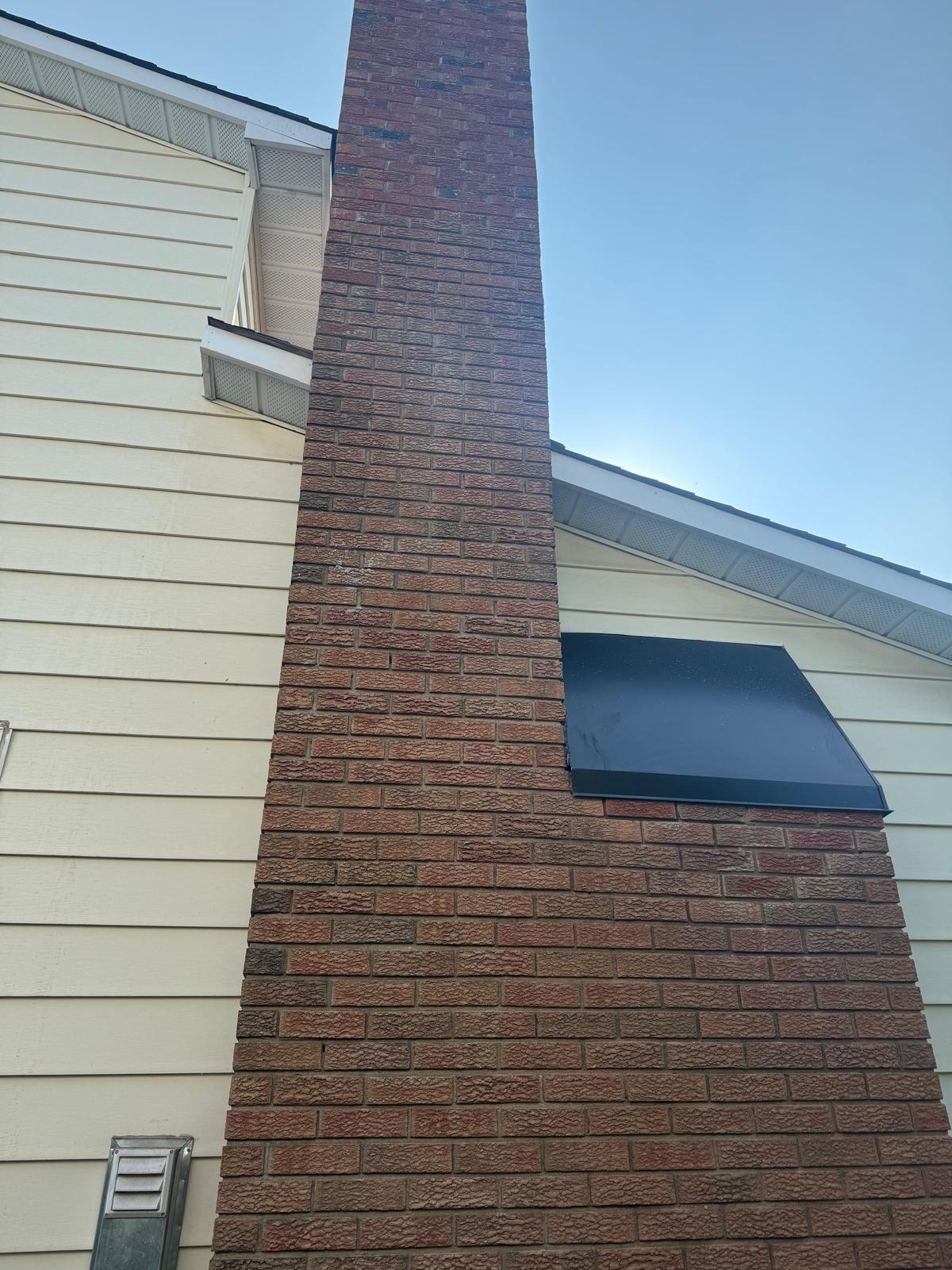
Check the Chimney from a Safe Location
Chimneys are among the most exposed masonry features on a property.
They receive rain, snow, wind, and temperature changes from virtually every direction.
From ground level or another safe viewing location, homeowners can watch for:
- Missing mortar
- Cracked bricks
- Loose masonry
- Visible deterioration near the top
- Damaged chimney caps
- White staining
Never climb onto a roof simply to perform a visual masonry inspection.
If something appears damaged, professional chimney repair in Ottawa can determine whether maintenance is needed before winter conditions become more severe.
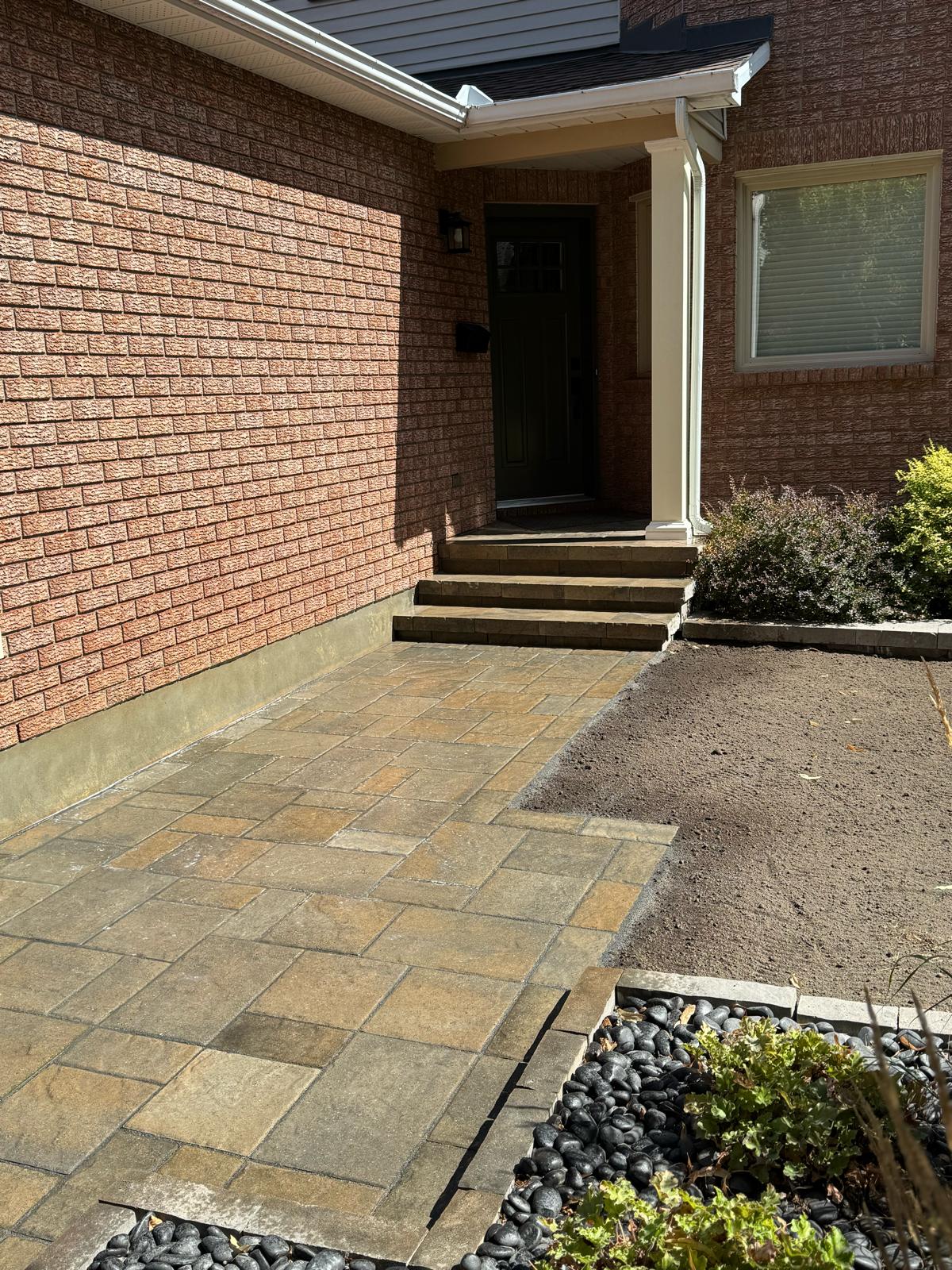
Examine Front Steps Carefully
Front steps need to remain stable throughout a season when snow and ice may already make walking more difficult.
Check for:
- Loose stones
- Rocking treads
- Cracked mortar
- Uneven surfaces
- Broken edges
A small amount of movement can become more noticeable after repeated freeze-thaw cycles.
Professional masonry step repair can restore stability while also improving the appearance of the entrance.
Pay Attention to Water Around Steps
Water pooling near masonry steps is another warning sign.
During winter, standing water can become ice. Moisture may also enter deteriorated joints or spaces beneath loose masonry.
Drainage should direct water away from the entrance whenever possible.
If puddles regularly form after rainfall, correcting the drainage issue may be just as important as repairing the visible masonry.
Inspect Window Sills and Stone Ledges
Horizontal masonry surfaces receive direct exposure to precipitation.
Window sills and decorative stone ledges should be checked for:
- Cracks
- Broken corners
- Failed joints
- Loose pieces
- Signs of water staining
A damaged sill can potentially allow moisture to affect the brickwork underneath or around the window.
Properties throughout Kanata, Stittsville, and Orléans can benefit from addressing these smaller details before freezing temperatures arrive.
Check Wall Caps and Coping Stones
Retaining walls, garden walls, pillars, and other masonry structures often have caps protecting their upper surfaces.
Inspect these areas for:
- Cracked caps
- Loose stones
- Open joints
- Missing mortar
Because caps receive direct rain and snow, deterioration can allow moisture into the wall beneath them.
Early repairs can help protect a much larger masonry investment.
Walk Across Interlock Surfaces
An interlock walkway or patio may look attractive while still developing small areas of settlement.
Walk slowly across the surface and watch for:
- Sunken pavers
- Raised edges
- Loose units
- Widening joints
- Water pooling
Uneven interlock can become more difficult to navigate once covered by snow.
Low spots can also collect water that later freezes.
Professional interlock repair in Ottawa may allow affected areas to be reset without unnecessarily replacing an entire installation.
Inspect Retaining Walls for Movement
Retaining walls should generally maintain a consistent alignment.
Potential warning signs include:
- Leaning
- Bulging
- Separation
- Significant cracking
- Loose caps
- Water accumulating nearby
Retaining wall movement can have several causes, including drainage and soil pressure.
Homeowners throughout Manotick, Rockland, and Kemptville with landscaped or sloped properties should include retaining walls in their seasonal inspections.
Look at Exposed Foundation Surfaces
The visible portion of the foundation also deserves attention.
Check for:
- Cracked parging
- Flaking surfaces
- Missing sections
- Recurring cracks
- Persistent moisture staining
Minor parging deterioration may require straightforward repair, while larger or recurring cracks may deserve further evaluation.
Parging should not be treated as a substitute for addressing significant foundation or water problems.
Make Sure Gutters Are Doing Their Job
Not every masonry problem begins with the masonry itself.
A leaking or overflowing gutter can repeatedly direct water onto a brick wall.
A poorly positioned downspout may concentrate water beside the foundation.
Before winter, homeowners should make sure roof drainage is functioning correctly.
Controlling unnecessary moisture can help protect brick, mortar, parging, steps, and foundation areas.
Watch Where Snow Accumulates
Snow naturally collects around homes, but repeated accumulation against vulnerable masonry can increase moisture exposure as temperatures fluctuate.
Pay attention to areas around:
- Foundation walls
- Steps
- Retaining walls
- Pillars
- Lower brick façades
When possible, avoid consistently piling large amounts of shoveled snow directly against deteriorated masonry.
Avoid Ignoring Small Cracks Until Spring
It can be tempting to postpone exterior maintenance once temperatures begin dropping.
However, a crack that is already allowing water into masonry may experience additional deterioration over winter.
Not every small crack represents an urgent problem, but identifying its cause before the coldest weather arrives can help homeowners make informed decisions.
Early professional assessment is particularly valuable when cracks are growing, recurring, or accompanied by loose masonry.
Ottawa’s Freeze-Thaw Conditions Make Prevention Valuable
Eastern Ontario does not simply remain frozen all winter.
Temperatures can repeatedly rise above freezing and then fall again.
This cycle matters because moisture may:
- Enter a crack or deteriorated joint.
- Freeze when temperatures drop.
- Expand within the opening.
- Thaw during warmer conditions.
- Allow additional moisture to enter.
Repeating this process can gradually worsen existing deterioration.
That is why fall masonry maintenance is less about making a property look perfect and more about reducing avoidable moisture problems before winter.
Know When to Call a Professional
Homeowners can perform basic visual inspections, but masonry diagnosis and repair are best left to experienced professionals when significant deterioration appears.
Professional assessment is especially worthwhile for:
- Bulging brick
- Loose masonry
- Large cracks
- Unstable steps
- Significant chimney deterioration
- Leaning retaining walls
- Recurring foundation cracks
The objective is to determine the cause before selecting a repair.
Final Thoughts
Preparing masonry for winter does not require rebuilding every imperfect area around a home.
It begins with awareness.
Checking mortar joints, brick surfaces, steps, chimneys, retaining walls, interlock, window sills, wall caps, and exposed foundation areas can reveal developing problems before another winter adds additional stress.
For homeowners throughout Ottawa, Kanata, Stittsville, Orléans, Manotick, Rockland, Arnprior, Kemptville, Brockville, and surrounding Eastern Ontario communities, timely masonry maintenance can help preserve existing materials, maintain curb appeal, and reduce the likelihood of larger repairs later.
Prepare Your Masonry for the Seasons Ahead
Our team provides professional masonry repair, brick restoration, repointing, chimney repair, masonry steps, retaining walls, natural stonework, interlock patios and walkways, parging, foundation masonry, and exterior masonry services throughout Ottawa and surrounding Eastern Ontario communities.
Phone: (613) 212-5995
Email: info@onecutbrickandstone.com
Contact us to schedule a professional masonry consultation. We can identify deteriorated areas, recommend appropriate repairs, and help keep your property’s brick, stone, and masonry ready for the demanding weather ahead.