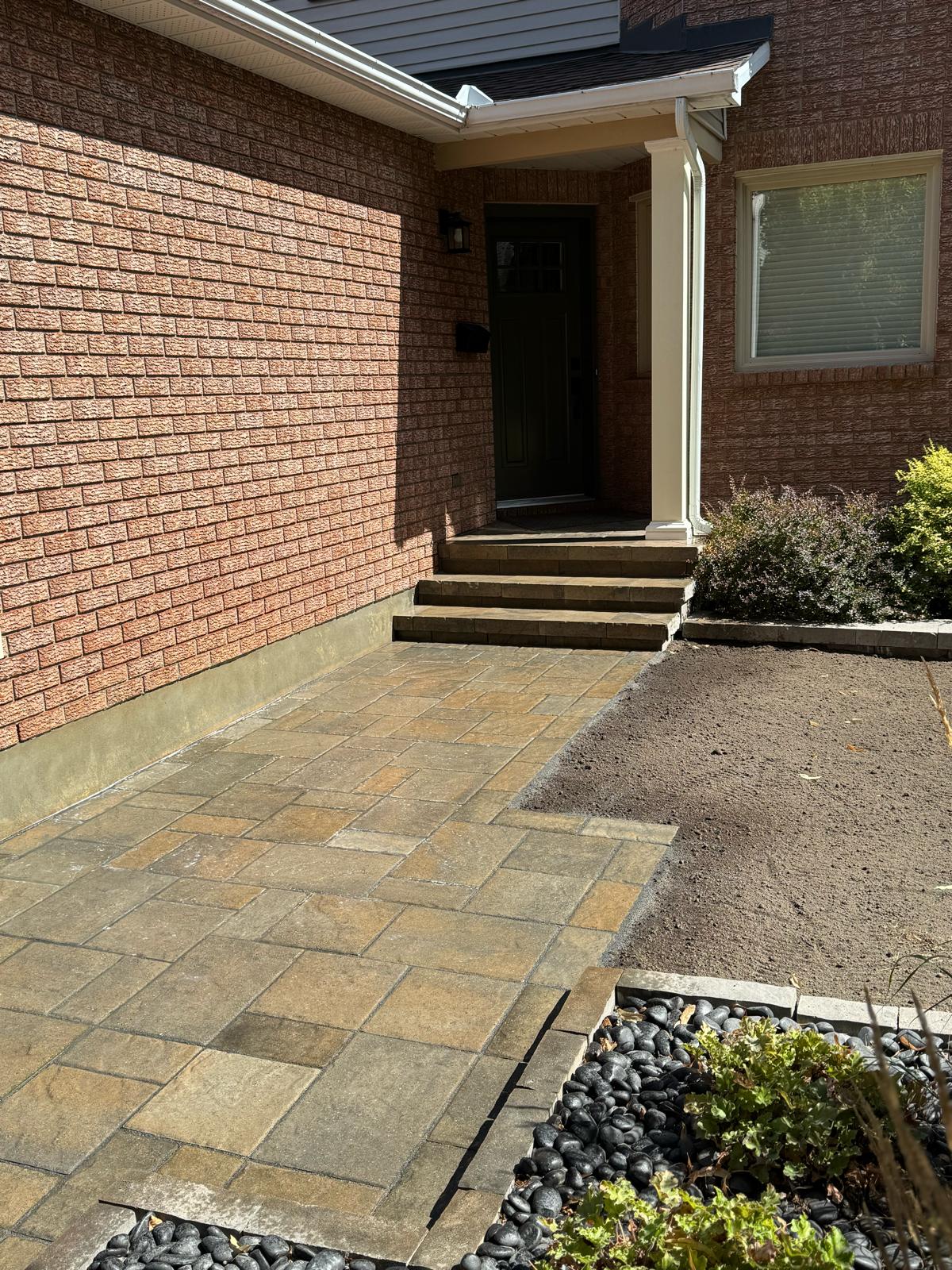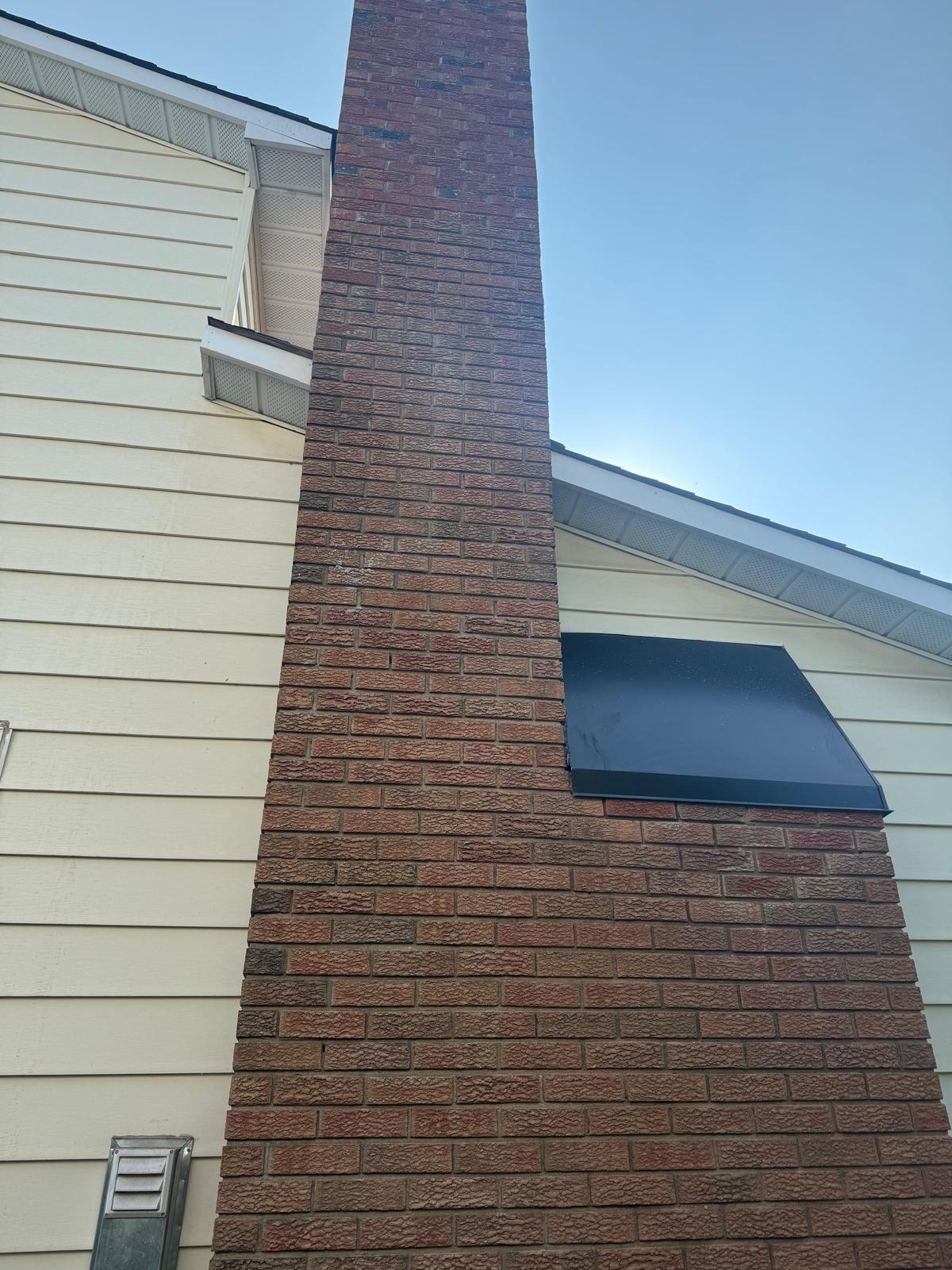

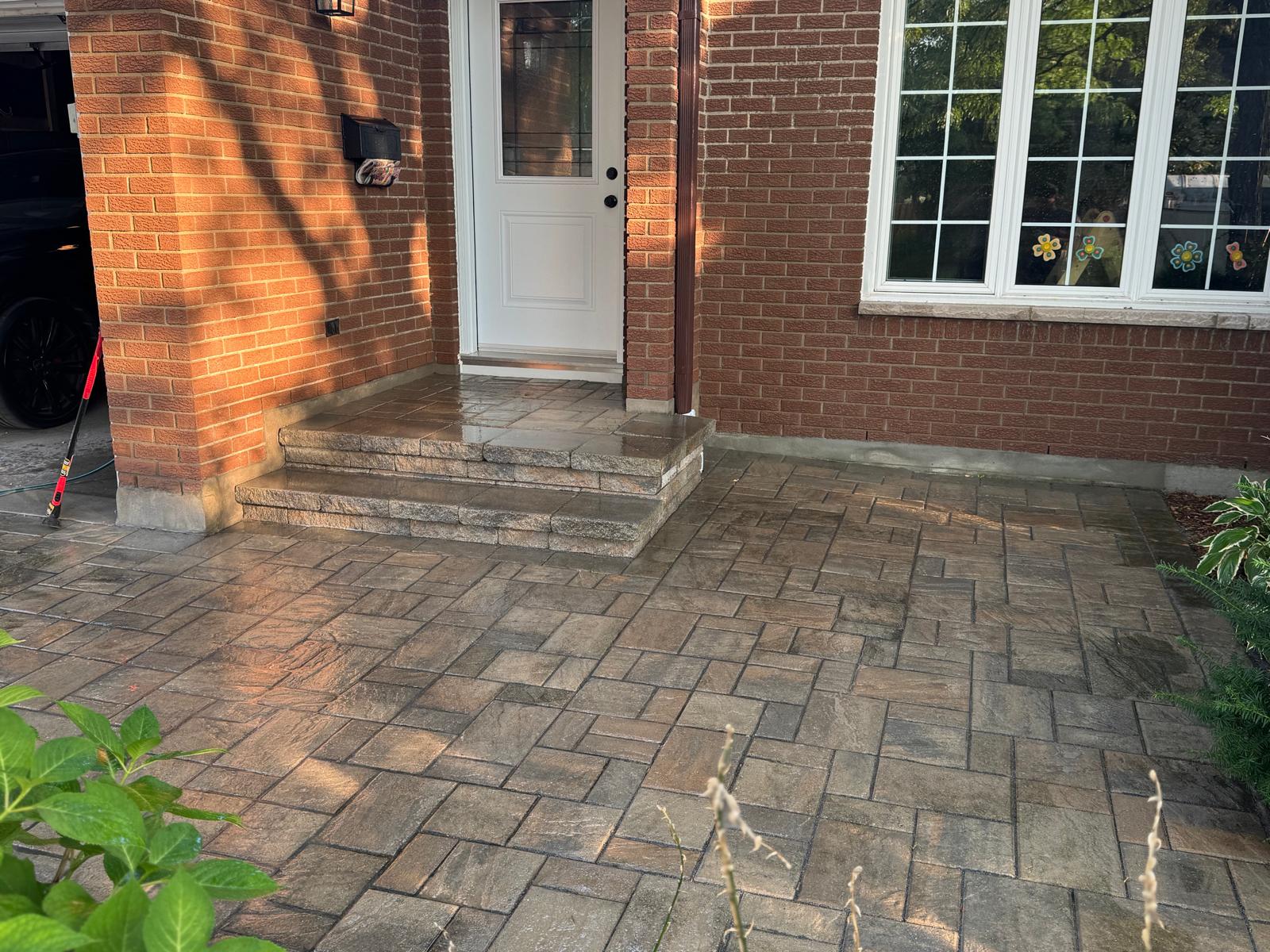
An interlock patio, walkway, or entrance can remain attractive for many years, but homeowners may eventually notice individual pavers or entire sections beginning to sink. Low spots can collect water, edges may become uneven, and once-smooth walkways can develop uncomfortable transitions.
The good news is that sunken interlock does not always mean the entire installation needs to be replaced.
For homeowners throughout Ottawa, Kanata, Stittsville, Orléans, Manotick, Rockland, Arnprior, Kemptville, Brockville, and surrounding Eastern Ontario communities, professional interlock resetting can often restore an existing surface when the pavers themselves remain in good condition.
We believe the first step is determining why the interlock moved. Correcting the underlying problem is what separates a lasting repair from a temporary surface adjustment.
Why Does Interlock Sink?
Interlocking pavers rely heavily on what is underneath them.
A properly constructed installation requires a stable base capable of supporting the surface through changing weather conditions and regular use.
Settlement may occur because of:
- Insufficient base preparation
- Base material consolidation
- Poor drainage
- Soil movement
- Water erosion
- Repeated freeze-thaw cycles
- Heavy loads
- Edge restraint problems
Sometimes only a small area settles. In other cases, movement may affect a larger portion of a patio or walkway.
Understanding the cause determines whether resetting is practical.
Ottawa Weather Can Affect Interlock Surfaces
Eastern Ontario’s climate creates challenging conditions for exterior hardscaping.
During winter, moisture in the ground can freeze. Seasonal temperature changes may cause soil and base materials to move.
When spring arrives, homeowners sometimes discover that a previously level walkway has developed:
- Low areas
- Raised pavers
- Uneven edges
- Small depressions
Properties throughout Ottawa, Kanata, and Stittsville experience these seasonal conditions every year.
Quality base construction and effective drainage help reduce movement, but even older installations can eventually require maintenance.
Water Pooling Is One of the Most Obvious Warning Signs
A properly graded interlock surface should help direct water appropriately.
When pavers sink, depressions may form where rain collects.
Standing water can:
- Make surfaces slippery
- Encourage additional base deterioration
- Create winter ice
- Affect surrounding landscaping
- Accelerate movement
If the same puddle appears after every rainfall, the surface should be evaluated.
Resetting the affected area may restore the appropriate elevation and drainage.
Uneven Pavers Can Become a Trip Hazard
A small height difference between neighbouring pavers may not look significant, but walkways should provide predictable footing.
Uneven surfaces can become particularly troublesome around:
- Front entrances
- Garden paths
- Patios
- Steps
- Driveway transitions
During an Ottawa winter, snow can hide uneven areas completely.
Professional interlock repair helps restore a smoother walking surface while improving the overall appearance of the property.
When Can Existing Pavers Be Reused?
One of the advantages of interlock is that individual units can often be removed and reinstalled.
If the existing pavers remain:
- Structurally sound
- Relatively intact
- Suitable for reuse
they may not need to be discarded.
The affected section can potentially be lifted, the underlying base corrected, and the original pavers reset.
This allows homeowners to preserve an established landscape while addressing the actual problem below.
Resetting Is Different from Surface Patching
A sunken interlock area cannot usually be corrected properly by simply placing material around the edges.
The elevation problem exists beneath the pavers.
A professional repair may involve:
- Carefully removing affected pavers.
- Evaluating the underlying base.
- Correcting unsuitable or settled areas.
- Restoring the required elevation.
- Reinstalling the pavers.
- Re-establishing joints and finishing the surface.
The exact process depends on the condition of the installation.
Drainage Must Be Considered During Repair
Resetting pavers without addressing water problems can allow settlement to return.
During an assessment, we consider where water is coming from and where it needs to go.
Potential issues may include:
- Downspouts discharging nearby
- Poor surface grading
- Runoff from adjacent landscaping
- Water collecting beside retaining walls
- Low areas near entrances
Homes throughout Orléans, Manotick, and Rockland have different property layouts, so drainage solutions should be tailored to actual site conditions.
Driveway Transitions Often Need Attention
Interlock near garage entrances or driveway edges can experience concentrated loads and seasonal movement.
Homeowners may notice:
- A dip near the garage
- Uneven transitions
- Pavers separating from adjacent surfaces
- Water collecting near the entrance
These conditions should be corrected before movement becomes more extensive.
A smooth transition improves both appearance and everyday usability.
Patio Settlement Can Affect Outdoor Living
A patio should provide a comfortable, stable surface for:
- Tables
- Chairs
- Barbecues
- Outdoor kitchens
- Fire features
When portions begin sinking, furniture may wobble and water may collect where people gather.
Localized resetting can help restore the patio without automatically rebuilding an outdoor space that is otherwise performing well.
This can be especially valuable for established landscapes where homeowners want to preserve existing stonework and surrounding gardens.
Edge Problems Can Allow Pavers to Spread
Interlocking surfaces depend on more than the central pavers.
Edges help keep the system contained.
When edge restraint fails, homeowners may notice:
- Pavers spreading outward
- Larger joints
- Misaligned borders
- Loose perimeter units
If addressed early, the affected section may be corrected before movement spreads farther into the installation.
What About Weeds Between Pavers?
Weeds do not necessarily mean the interlock has structurally failed.
Organic material can accumulate in joints over time and provide an environment for seeds to grow.
However, unusually wide joints may indicate movement.
If pavers are separating as well as sinking, the underlying condition should be evaluated rather than treating weed growth as the only problem.
Joint Material Is Part of Interlock Maintenance
The joints between pavers help the surface function as a system.
Over time, joint material can be reduced by:
- Weather
- Cleaning
- Water movement
- Regular wear
After resetting, appropriate joint finishing helps stabilize the repaired surface.
Routine inspection can also identify areas where joint maintenance is needed before substantial movement develops.
When Is Complete Replacement More Appropriate?
Not every interlock surface is a good candidate for localized resetting.
More extensive reconstruction may be appropriate when:
- Settlement affects most of the installation
- Base failure is widespread
- Drainage is fundamentally incorrect
- Many pavers are damaged
- The existing layout no longer meets the homeowner’s needs
Professional assessment helps homeowners avoid unnecessary replacement while also recognizing when a larger rebuild will provide better long-term value.
Existing Interlock Can Often Be Incorporated Into Improvements
Sometimes a repair becomes an opportunity to improve the landscape.
Homeowners may decide to:
- Widen a walkway
- Add a border
- Improve drainage
- Connect a patio to a garden path
- Integrate nearby masonry steps
Where practical, reusable existing pavers can potentially remain part of the updated design.
Maintaining Interlock After Resetting
After repairs, homeowners can help preserve the surface by watching for early signs of movement.
Periodically inspect for:
- New low spots
- Loose edge pavers
- Joint deterioration
- Water pooling
- Unusual movement
Keeping nearby drainage systems functioning properly can also help protect the base.
The earlier changes are identified, the easier they may be to correct.
Professional Repairs Protect the Overall Landscape
Interlock is often connected visually and functionally to other masonry features.
A walkway may lead to natural stone steps. A patio may meet a retaining wall. An entrance may combine brick, stone, and interlocking pavers.
Repairing sunken sections helps maintain a clean transition between these features.
For homes throughout Arnprior, Kemptville, Brockville, and the greater Ottawa region, professionally maintained interlock can contribute significantly to curb appeal and outdoor usability.
Final Thoughts
Sunken interlock does not automatically mean homeowners need to tear out an entire patio or walkway.
When the existing pavers remain in good condition and the problem is localized, professional resetting may provide an effective solution.
The key is correcting what caused the settlement rather than simply making the surface look level temporarily.
By addressing base conditions, drainage, edge stability, and proper elevation, homeowners can restore the appearance and function of existing interlock while extending its useful life.
Restore Your Interlock Without Unnecessary Replacement
Our team provides professional interlock repair and resetting, patios, walkways, masonry steps, retaining walls, brick repair, natural stonework, chimney masonry, foundation masonry, and exterior masonry services throughout Ottawa, Kanata, Stittsville, Orléans, Manotick, Rockland, Arnprior, Kemptville, Brockville, and surrounding communities.
Phone: (613) 212-5995
Email: info@onecutbrickandstone.com
Contact us today to schedule a professional consultation. We can assess sunken or uneven interlock, determine what is causing the movement, and recommend a practical solution designed to restore the safety, drainage, appearance, and long-term performance of your outdoor space.