
When part of a brick wall becomes damaged, replacing a few bricks may sound straightforward. Remove the deteriorated units, install new ones, repair the mortar, and the wall is finished.
In reality, successful brick restoration requires considerably more attention to detail.
The replacement bricks need to work with the existing masonry both visually and physically. Differences in size, colour, texture, absorption, and other material characteristics can leave repairs looking obvious or performing differently from the original wall.
For homeowners throughout Ottawa, Kanata, Stittsville, Orléans, Manotick, Rockland, Arnprior, Kemptville, Brockville, and surrounding Eastern Ontario communities, careful brick matching can be particularly important when restoring older or architecturally distinctive properties.
We approach brick replacement with the goal of preserving as much sound existing masonry as practical while creating a repair that blends naturally into the home.
Why Would Individual Bricks Need Replacement?
Brick is exceptionally durable, but individual units can deteriorate because of age, moisture, impact, or prolonged weather exposure.
Common reasons for replacement include:
- Spalling
- Deep cracking
- Broken brick faces
- Severe surface deterioration
- Localized moisture damage
- Previous inappropriate repairs
- Physical impact
Not every imperfect brick needs replacement.
When a brick remains serviceable, preserving it may be preferable. Selective replacement is generally focused on units that have deteriorated enough to affect the appearance or performance of the masonry.
Brick Colour Is Only the Beginning
Homeowners often assume brick matching simply means finding the same colour.
Colour certainly matters, but it is only one characteristic.
Two bricks that appear similar individually can look very different once installed side by side.
Professionals may consider:
- Base colour
- Colour variation
- Surface texture
- Dimensions
- Edge shape
- Finish
- Manufacturing characteristics
The objective is not always to find a brick that looks identical under every lighting condition. That may be difficult with older masonry. The goal is to find a suitable replacement that integrates naturally with the existing wall.
Older Brick Can Be Especially Challenging to Match
Many established homes throughout Ottawa, Manotick, Arnprior, and Brockville contain brick that has been exposed to decades of weathering.
Even if the original brick product were available, the existing wall may no longer look exactly as it did when constructed.
Sun, rain, pollution, moisture, and age can gradually alter appearance.
This means restoration involves matching the brick as it exists today rather than simply matching an original product description.
Brick Size Matters
Even small dimensional differences can become noticeable across a masonry wall.
If replacement bricks are significantly taller, shorter, longer, or deeper than the originals, maintaining consistent mortar joints becomes difficult.
Poor dimensional matching may create:
- Irregular joints
- Misaligned courses
- Visually obvious patches
Careful measurement is therefore an important part of planning brick restoration.
Texture Can Make a Repair Stand Out
Brick surfaces vary considerably.
Some bricks are relatively smooth, while others may be:
- Rough
- Tumbled
- Textured
- Irregular
- Sand-faced
A replacement with the correct colour but the wrong texture may still look noticeably different.
Texture also affects how light and shadow interact with the façade, which can make mismatched areas more obvious at certain times of day.
Mortar Matching Is Just as Important
Even perfectly selected replacement bricks can look out of place if the new mortar is dramatically different from the existing joints.
Mortar contributes significantly to the overall appearance of brickwork.
Restoration may require consideration of:
- Mortar colour
- Texture
- Joint width
- Joint profile
- Compatibility with existing masonry
For older brickwork, compatibility is particularly important.
Using a mortar that is inappropriate for the existing brick can affect how the repaired area responds to moisture and movement.
Why Mortar Should Not Automatically Be Extremely Hard
Mortar and brick need to function together.
In many traditional masonry systems, mortar is intended to accommodate some movement and weathering rather than forcing all stress into the brick.
Installing excessively hard mortar beside softer older brick may create undesirable performance differences.
Professional Masonry Repair Ottawa projects should therefore consider the age and characteristics of the existing wall before selecting replacement mortar.
Spalling Brick Should Be Addressed Before It Spreads
Spalling occurs when portions of the brick face begin flaking or breaking away.
Moisture is often an important contributor.
Once the protective exterior surface becomes damaged, the brick may become increasingly vulnerable to weather exposure.
Ottawa’s repeated freeze-thaw cycles can accelerate deterioration when moisture enters weakened masonry.
A few deteriorated bricks today can potentially become a larger restoration project if the underlying moisture source continues for several winters.
Finding the Cause Is More Important Than Replacing the Brick Alone
Replacing a damaged brick improves the visible problem, but homeowners should also ask why the brick deteriorated.
Possible contributors include:
- Leaking gutters
- Damaged window sills
- Poor drainage
- Deteriorated mortar
- Chimney cap problems
- Persistent water runoff
If the moisture source remains, new masonry may eventually experience similar conditions.
We therefore look at the surrounding area rather than treating every damaged brick as an isolated problem.
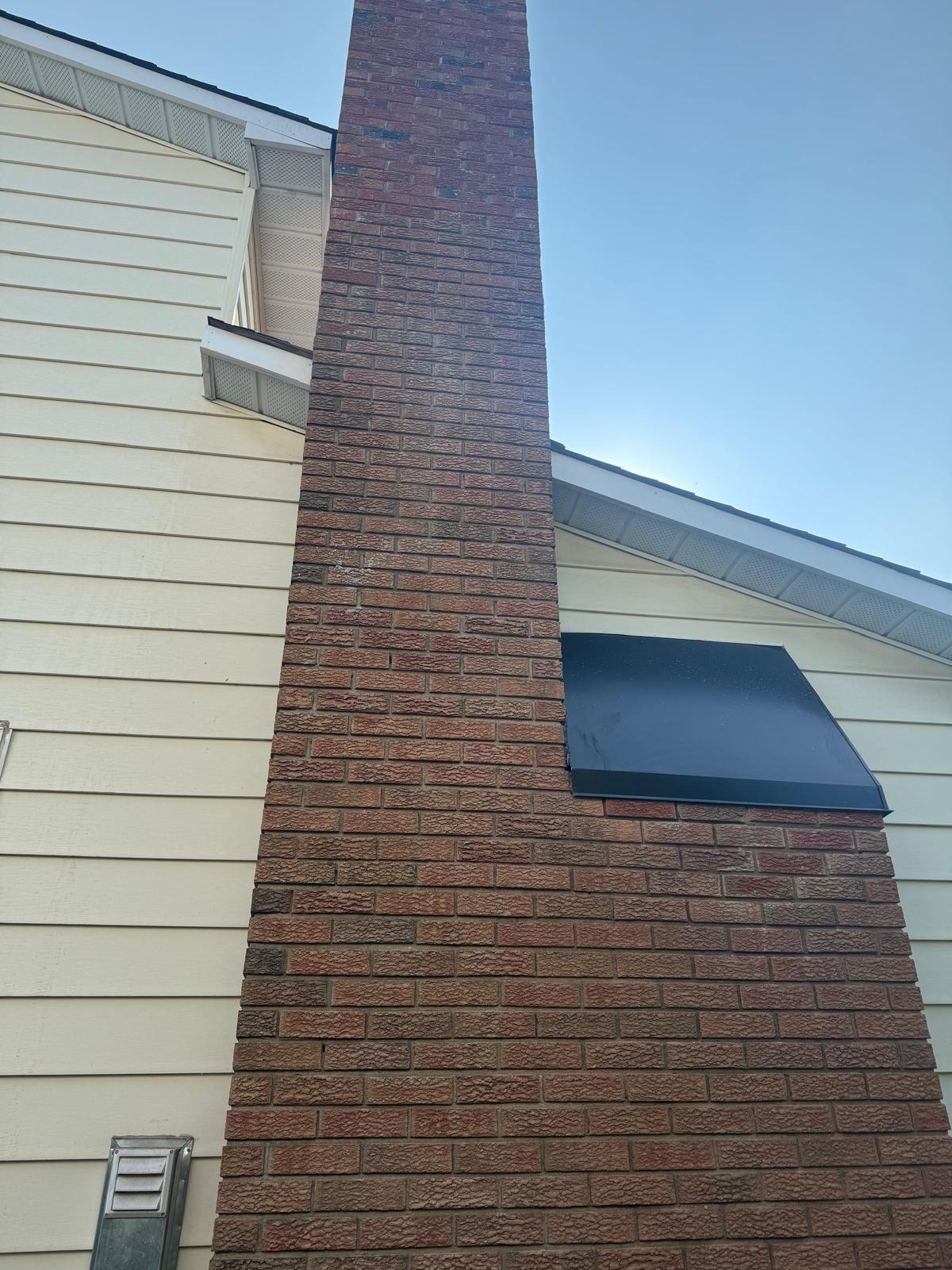
Chimney Brick Matching Requires Particular Attention
Chimneys frequently require selective brick replacement because of their high exposure to weather.
Professional Chimney Repair Ottawa may involve replacing damaged units while preserving sound portions of the structure.
Because chimneys are highly visible above the roofline, mismatched brick can affect the appearance of the entire home.
Material compatibility is equally important because chimney masonry must withstand substantial rain, snow, wind, and temperature changes.
Window and Door Areas Commonly Need Localized Restoration
Brick deterioration sometimes develops around openings where water management and masonry transitions become more complex.
Homeowners may notice:
- Cracked bricks
- Deteriorated mortar
- Damage below window sills
- Changes around door openings
Professional restoration should evaluate both the damaged masonry and the nearby components that may be contributing to the problem.
Replacing bricks without correcting a damaged sill, for example, may leave the underlying moisture issue unresolved.
Avoiding the “Patchwork” Appearance
One of the clearest signs of poor brick matching is a repair that resembles a rectangular patch.
The new area may be:
- Too bright
- Too uniform
- Too smooth
- Different in size
- Surrounded by noticeably different mortar
Professional brick restoration aims to minimize this contrast.
Sometimes careful distribution of suitable replacement units can help the restored area integrate more naturally, depending on the scope and construction of the wall.
New Brick May Still Look Slightly Different at First
Homeowners should also understand that freshly installed masonry may initially appear somewhat different from older surrounding materials.
New mortar, in particular, can change in appearance as it cures and weathers.
A quality restoration should be planned for long-term visual compatibility rather than judged solely by how the repair looks immediately after installation.
Selective Replacement Can Preserve Architectural Character
One of the biggest benefits of professional brick restoration is the ability to preserve sound original masonry.
Instead of unnecessarily rebuilding an entire façade, deteriorated areas can sometimes be repaired selectively.
This approach can be valuable for older properties throughout Ottawa, Rockland, Kemptville, and Brockville, where original masonry contributes to the home’s character.
Preserving usable material also helps maintain more of the property’s existing appearance.
When Is Larger Reconstruction Necessary?
Selective brick replacement is not appropriate for every situation.
More extensive rebuilding may be required when there is:
- Widespread deterioration
- Significant wall movement
- Large areas of loose masonry
- Severe structural displacement
- Extensive moisture-related damage
Professional assessment helps determine whether localized restoration is practical or whether a larger section should be reconstructed.
Professional Restoration Protects Property Value
Brick is a major visual feature of many homes.
Well-maintained masonry communicates permanence and quality, while obvious patches or deteriorated areas can negatively affect curb appeal.
Professional restoration helps protect:
- Architectural character
- Exterior appearance
- Masonry performance
- Long-term property value
For homeowners planning future exterior renovations, repairing damaged brick can also provide a stronger foundation for other improvements.
Final Thoughts
Matching old brick during masonry restoration requires more than choosing a replacement with a similar colour.
Brick dimensions, texture, finish, mortar compatibility, joint appearance, weathering, and the cause of the original deterioration all need to be considered.
For homeowners throughout Ottawa, Kanata, Stittsville, Orléans, Manotick, Rockland, Arnprior, Kemptville, Brockville, and surrounding Eastern Ontario communities, professional brick restoration can preserve existing masonry while helping repairs blend naturally into the property.
The best restoration should not draw attention to itself. It should protect the wall, respect the original materials, and allow the masonry to remain one of the home’s strongest architectural features.
Restore Damaged Brick Without Losing Your Home’s Character
Our team provides professional brick restoration, brick replacement, repointing, chimney repair, natural stonework, masonry steps, retaining walls, interlock, patios, walkways, parging, foundation masonry, and exterior masonry services throughout Ottawa and surrounding communities.
Phone: (613) 212-5995
Email: info@onecutbrickandstone.com
Contact us today to arrange a professional masonry consultation. We can evaluate damaged brickwork, identify suitable restoration options, and recommend a repair designed to preserve the appearance, durability, and long-term value of your masonry.