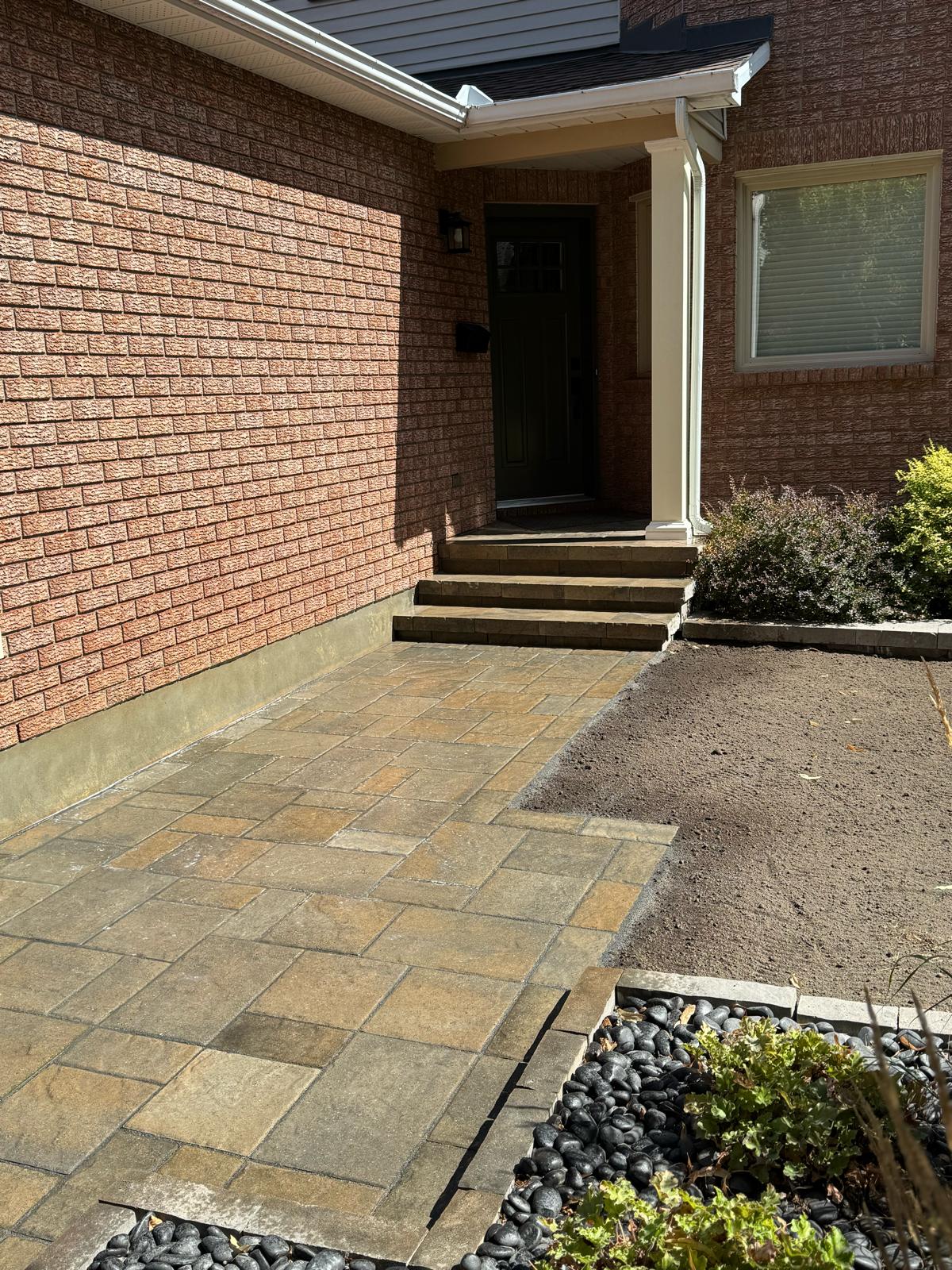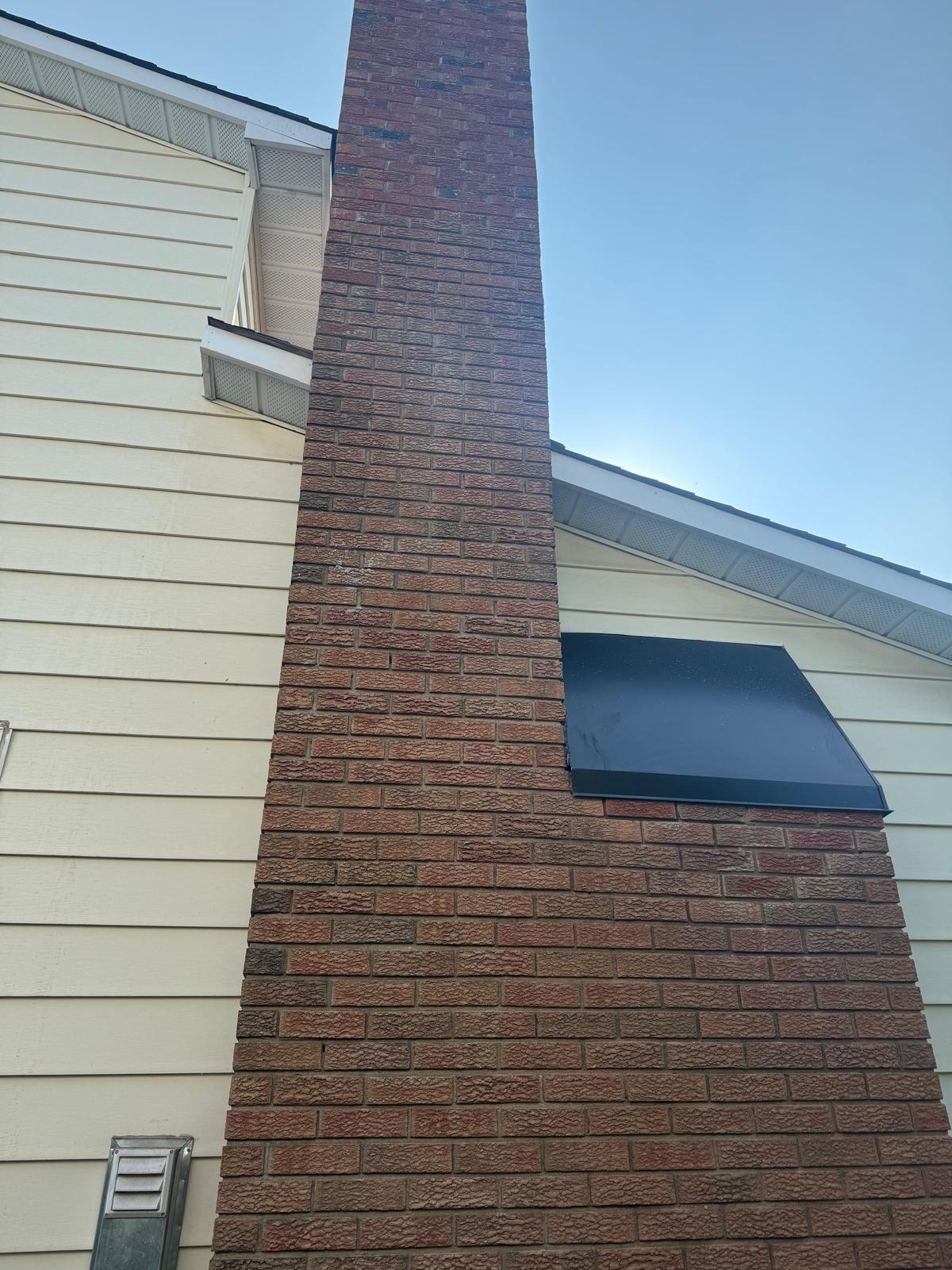

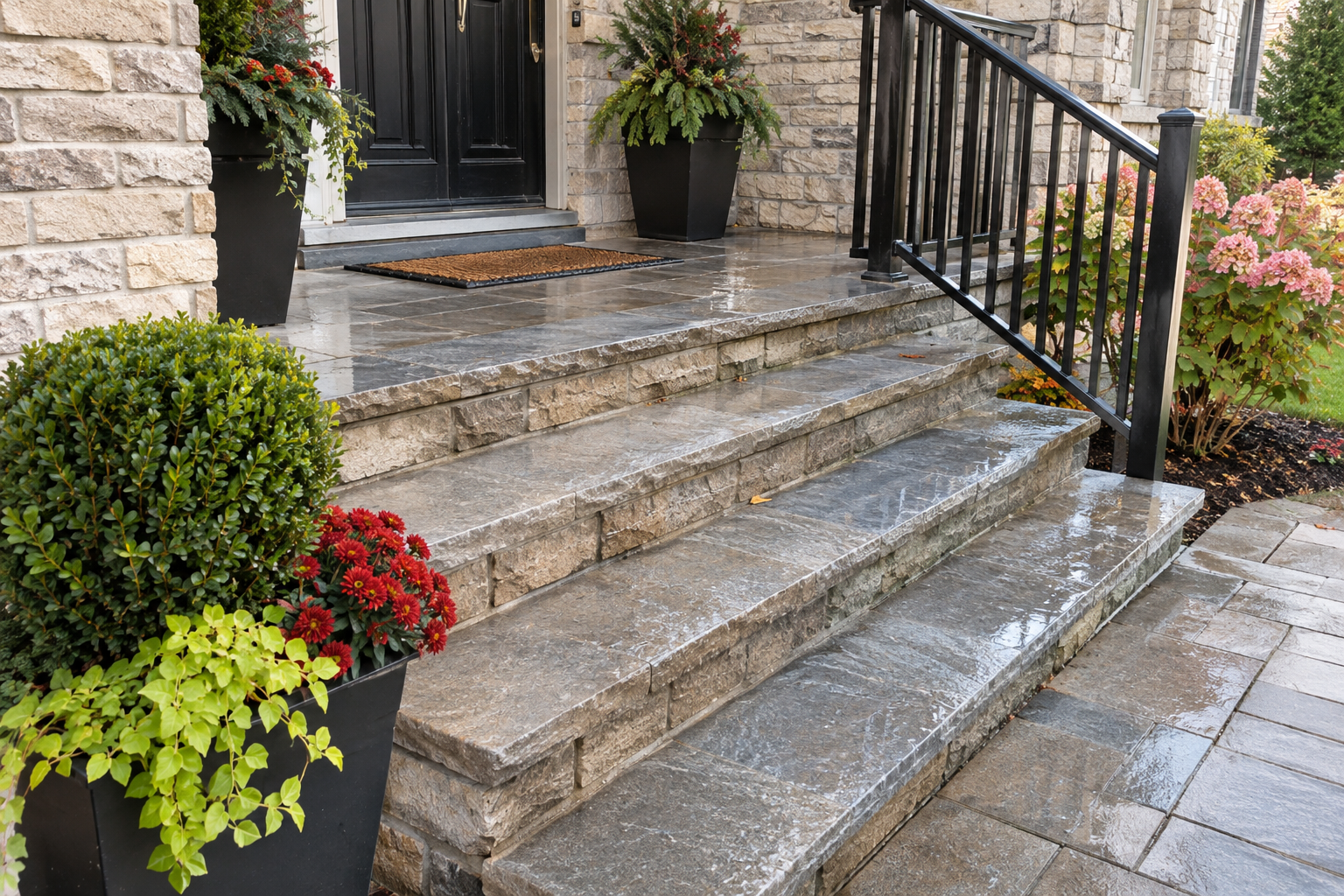
Outdoor steps and landings are essential parts of a home’s entrance. They provide access, improve curb appeal, and connect walkways with porches and doorways. However, even beautifully constructed masonry steps can develop problems when water is allowed to collect around or beneath them.
Standing water, deteriorated mortar, loose stones, and uneven landings may indicate that drainage is no longer functioning properly. Without attention, these conditions can contribute to more extensive masonry damage.
For homeowners throughout Ottawa, Kanata, Stittsville, Orléans, Manotick, Rockland, Arnprior, Kemptville, Brockville, and surrounding Eastern Ontario communities, proper drainage is especially important because of the region’s rain, snow, ice, and repeated freeze-thaw cycles.
At One Cut Brick & Stone, we believe durable masonry construction begins with understanding how water moves around a property. Proper grading, stable foundations, and effective drainage help outdoor steps and landings remain attractive and functional for years.
Why Drainage Matters for Masonry Steps
Outdoor masonry steps are constantly exposed to changing weather conditions.
Rain falls directly onto the treads, snow accumulates during winter, and melting ice can create moisture around joints and supporting materials.
When water cannot drain effectively, it may collect on the surface or move beneath the masonry.
Over time, excessive moisture can contribute to:
- Cracked mortar joints
- Loose stone or brick
- Surface deterioration
- Uneven steps
- Settlement
- Winter ice formation
Proper drainage helps reduce these problems by directing water away from vulnerable areas.
Standing Water Is an Early Warning Sign
One of the clearest indicators of a drainage problem is water remaining on a landing after rainfall.
A small puddle may appear harmless, but repeated water accumulation can affect the masonry over time.
Homeowners should watch for:
- Water pooling near the front door
- Puddles along step edges
- Wet mortar joints
- Water collecting between the landing and walkway
- Persistent dampness after surrounding surfaces have dried
Properties throughout Ottawa, Kanata, and Stittsville experience substantial seasonal precipitation, making these warning signs worth investigating.
Professional assessment can determine whether the problem involves surface grading, settlement, or another condition.
How Freeze-Thaw Cycles Affect Steps
Eastern Ontario winters create challenging conditions for exterior masonry.
When moisture enters cracks or joints, it may freeze as temperatures drop.
The expansion of freezing water can place pressure on weakened materials.
Repeated cycles may contribute to:
- Larger cracks
- Spalling stone
- Loose bricks
- Mortar deterioration
- Shifting masonry units
Effective drainage reduces unnecessary moisture exposure and helps protect the masonry from preventable deterioration.
Proper Slope Helps Water Move Away
Outdoor landings should be designed to shed water appropriately without creating uncomfortable or unsafe walking surfaces.
When a landing slopes toward the home, water may collect near the entrance.
When it has insufficient drainage, puddles can form across the surface.
Professional masonry installation considers the relationship between:
- The doorway
- Landing
- Steps
- Walkway
- Surrounding landscaping
The goal is to create a stable entrance that manages water effectively while maintaining safe, consistent step dimensions.
Why the Base Beneath Steps Matters
The visible stone or brick is only part of a masonry step system.
The supporting base is equally important.
If water accumulates beneath the structure, unsuitable base materials or soil conditions may contribute to movement.
Homeowners may eventually notice:
- Uneven treads
- Gaps between steps
- Separation from nearby masonry
- Settled landings
- Cracked joints
For properties throughout Orléans, Manotick, and Rockland, proper preparation and drainage are important considerations when constructing or restoring outdoor masonry steps.
Walkways Can Affect Step Drainage
Steps rarely function independently from surrounding hardscaping.
A walkway that slopes toward the entrance may direct additional runoff onto the landing.
Similarly, settled interlock can create low areas where water collects near the bottom step.
Professional masonry repair should consider the complete entrance layout rather than focusing only on the visibly damaged step.
Correcting nearby grading or walkway settlement may help protect the repaired masonry.
Mortar Joints Need Protection from Excessive Moisture
Mortar helps connect masonry units and maintain the integrity of the installation.
When joints are repeatedly saturated, deterioration may become more noticeable.
Common warning signs include:
- Crumbling mortar
- Open joints
- Cracks
- Missing material
- Loose stone edges
Professional repointing may restore deteriorated joints when the surrounding masonry remains stable.
However, if drainage problems continue, new mortar may remain exposed to the same damaging conditions.
Addressing the moisture source is therefore important.
Natural Stone Steps Require Proper Water Management
Natural stone is a popular choice for outdoor entrances because of its appearance and durability.
However, even quality stone installations require appropriate support and drainage.
Water may collect around:
- Stone joints
- Landing transitions
- Step edges
- Supporting masonry
Professional installation helps ensure the selected materials work together as a complete system.
For homeowners investing in natural stone steps in Ottawa, proper drainage should be considered from the beginning of the project.
Watch for Water Near the Foundation
Front steps and landings are often located directly beside the home’s foundation.
Poor drainage around the entrance can increase moisture exposure near this important area.
Homeowners should check whether water is:
- Flowing toward the foundation
- Collecting beside the landing
- Entering gaps between structures
- Pooling near basement windows
Masonry repairs may need to be coordinated with grading or drainage improvements to address the underlying problem.
Why Surface Repairs Alone May Not Last
A cracked landing can sometimes be repaired locally.
However, if the crack developed because the supporting base is moving or water is accumulating underneath, a surface repair may not provide a lasting solution.
Professional evaluation considers:
- The condition of the masonry
- Drainage patterns
- Base stability
- Settlement
- Surrounding surfaces
This helps determine whether localized repair, resetting, or more extensive reconstruction is appropriate.
Maintaining Steps Throughout the Year
Homeowners can help protect outdoor masonry steps with regular maintenance.
Useful practices include:
- Keeping drainage paths clear
- Removing accumulated debris
- Monitoring recurring puddles
- Checking for loose masonry
- Inspecting mortar joints
- Addressing nearby walkway settlement
During winter, use snow and ice removal methods appropriate for the masonry material. Some de-icing products can contribute to surface deterioration, particularly when materials are already damaged.
Routine attention helps identify small concerns before they become larger repairs.
When Should Homeowners Contact a Masonry Professional?
Professional assessment is recommended when steps or landings show:
- Repeated water pooling
- Significant cracking
- Loose treads
- Visible settlement
- Separation from adjacent masonry
- Uneven walking surfaces
- Recurring mortar failure
These symptoms may indicate problems beyond ordinary surface wear.
A qualified professional can assess the condition and recommend an appropriate solution.
Proper Drainage Supports Curb Appeal and Safety
An attractive entrance should also be practical.
When water drains effectively, steps and landings are less likely to develop persistent puddles or unnecessary moisture-related deterioration.
Well-maintained masonry contributes to:
- Safer access
- Cleaner exterior appearance
- Better long-term performance
- Reduced maintenance concerns
- Improved curb appeal
For homeowners throughout Arnprior, Kemptville, Brockville, and the greater Ottawa region, professional step construction and maintenance can help preserve both appearance and usability.
Final Thoughts
Proper drainage is one of the most important considerations in the construction and maintenance of outdoor masonry steps and landings.
Without effective water management, even attractive brick or stone installations may develop cracks, settlement, loose materials, and premature deterioration.
For homeowners throughout Ottawa, Kanata, Stittsville, Orléans, Manotick, Rockland, Arnprior, Kemptville, Brockville, and surrounding Eastern Ontario communities, addressing drainage problems early can help protect existing masonry and reduce the likelihood of more extensive restoration.
Durable masonry requires more than quality materials. It also depends on proper preparation, stable support, thoughtful design, and professional workmanship.
Professional Masonry Step and Landing Repair in Ottawa
At One Cut Brick & Stone, we provide professional masonry services for residential properties throughout Ottawa and surrounding Eastern Ontario communities.
Our services include masonry step repair, stone step installation, landing restoration, interlock walkways, retaining walls, natural stonework, brick repair, repointing, chimney repair, parging, and foundation masonry.
Whether your entrance has uneven steps, deteriorated mortar, loose stone, or recurring water pooling, our team can assess the condition and recommend practical masonry solutions.
Phone: (613) 212-5995
Email: info@onecutbrickandstone.com
Contact One Cut Brick & Stone today to schedule a professional masonry consultation. Let us help restore the safety, appearance, drainage, and long-term durability of your outdoor steps and landings.