
Brick walls are valued for their strength, durability, and timeless appearance. When properly constructed and maintained, masonry can remain in excellent condition for decades. However, homeowners may occasionally notice sections of exterior brickwork beginning to bow, bulge, or separate from the surrounding wall.
Unlike minor surface staining or small mortar imperfections, a visibly bulging brick wall may indicate movement within the masonry system. This condition should not be ignored because it can affect the stability of the wall and create potential safety concerns.
For homeowners throughout Ottawa, Kanata, Stittsville, Orléans, Manotick, Rockland, Arnprior, Kemptville, Brockville, and surrounding Eastern Ontario communities, recognizing the early warning signs of masonry movement can help prevent further deterioration.
At One Cut Brick & Stone, we believe proper masonry restoration begins with understanding the underlying cause. A professional assessment helps determine whether the wall requires localized repairs, structural investigation, or more extensive reconstruction.
What Is a Bulging Brick Wall?
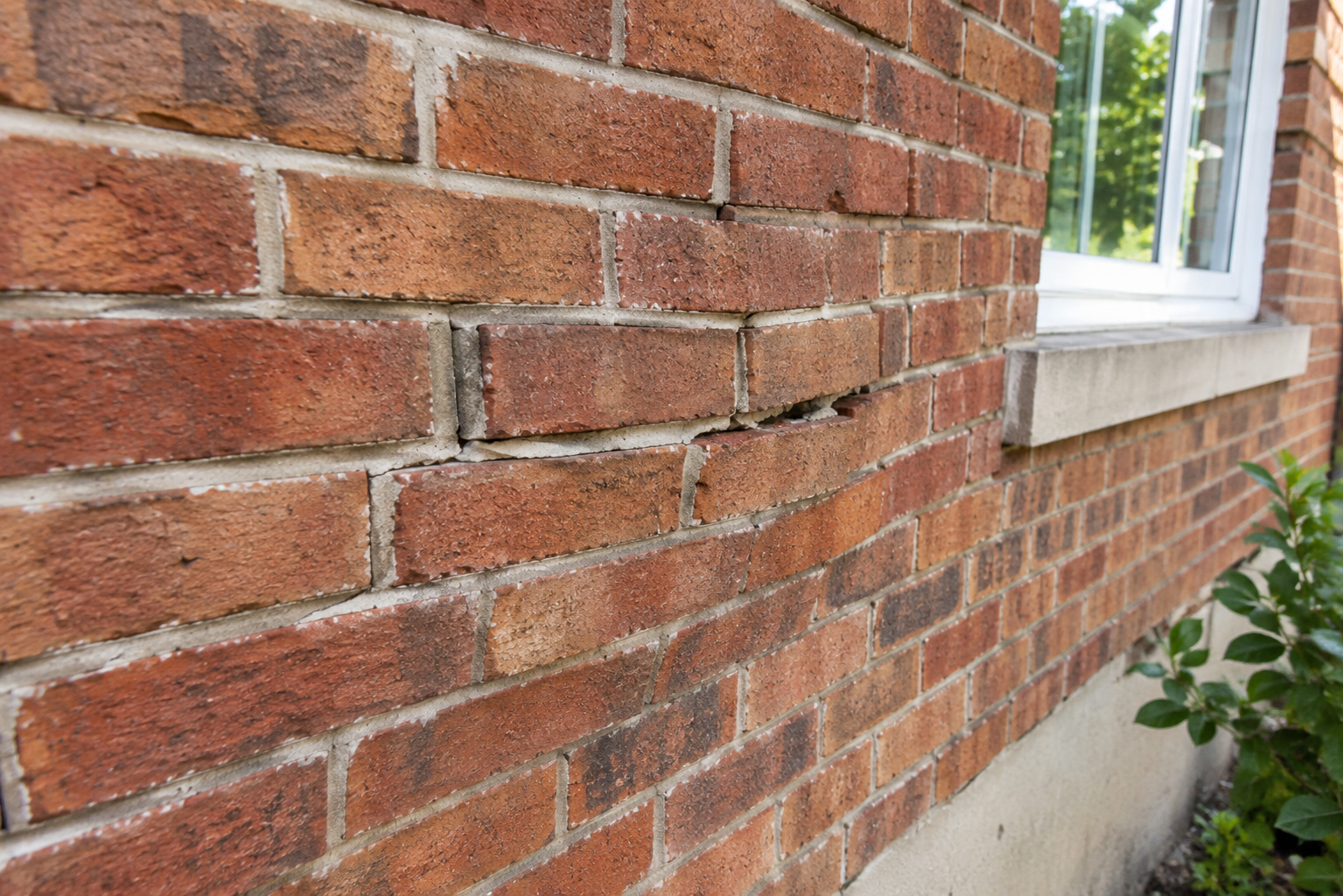
A bulging brick wall occurs when a section of masonry moves outward from its original alignment.
The movement may affect a small area or extend across a larger section of the façade.
Common signs include:
- Brickwork projecting outward
- Uneven wall surfaces
- Horizontal or stair-step cracks
- Separation near corners
- Loose mortar joints
- Visible gaps between building materials
Some movement develops gradually, making it difficult for homeowners to notice until the change becomes significant.
A visibly bulging or unstable wall should be evaluated promptly by an appropriately qualified professional. People should avoid standing near areas where loose masonry could fall.
Why Do Brick Walls Begin to Bulge?
Masonry movement can develop for several reasons.
Potential contributing factors include:
- Deteriorated wall ties
- Moisture infiltration
- Corrosion of embedded metal components
- Structural movement
- Foundation settlement
- Freeze-thaw damage
- Previous construction deficiencies
The exact cause depends on the wall’s construction, age, condition, and exposure.
Identifying the cause is essential because surface repairs alone cannot correct a wall that is actively moving.
Deteriorated Wall Ties Can Contribute to Movement
Many brick veneer walls rely on metal ties or other connectors to secure the masonry to the supporting structure.
These components help maintain the intended relationship between the brick veneer and the wall behind it.
Over time, moisture exposure or corrosion may affect certain metal connectors.
If connections deteriorate significantly, sections of brickwork may become inadequately restrained.
This can contribute to outward movement or instability.
Professional investigation may be necessary to determine whether the wall’s connections remain effective.
Moisture Can Accelerate Masonry Deterioration
Water is one of the most common contributors to exterior masonry problems.
Moisture may enter through:
- Cracked mortar joints
- Damaged flashing
- Deteriorated brick
- Defective drainage details
- Openings around building components
When moisture remains within vulnerable areas, it can contribute to material deterioration and corrosion.
For homes throughout Ottawa, Kanata, and Stittsville, managing moisture is particularly important because of seasonal temperature changes.
How Freeze-Thaw Cycles Affect Brickwork
Eastern Ontario experiences repeated freezing and thawing throughout the colder months.
Water entering cracks or porous masonry may freeze and expand, placing additional pressure on weakened materials.
Over time, this can contribute to:
- Cracked bricks
- Spalling
- Mortar deterioration
- Widening joints
- Localized displacement
Freeze-thaw cycles do not explain every bulging wall, but they can worsen existing masonry defects.
Addressing moisture problems and deteriorated joints helps protect surrounding materials.
Foundation Movement May Affect Exterior Walls
A building’s foundation supports the structure above it.
If settlement or movement occurs, cracking may develop in the masonry.
Homeowners may notice:
- Stair-step cracks
- Separation around openings
- Uneven brick courses
- Cracks near corners
- Changes in wall alignment
These symptoms do not automatically confirm foundation failure.
However, significant or progressive movement should be evaluated by a qualified professional before masonry repairs begin.
Properties throughout Orléans, Manotick, and Rockland may have different soil and site conditions, making individual assessment important.
Why Older Brick Buildings Need Careful Evaluation
Established homes throughout Ottawa, Arnprior, and Brockville may contain masonry systems constructed using methods different from those used in newer homes.
Older buildings can have:
- Multi-wythe brick walls
- Different mortar compositions
- Aging embedded components
- Previous repairs
- Historic construction details
Understanding the original wall system is essential when planning restoration.
An appropriate repair should respect the existing materials while addressing any underlying stability concerns.
Warning Signs Homeowners Should Never Ignore
Certain symptoms deserve immediate attention.
These include:
- Rapidly increasing wall movement
- Large cracks
- Loose or falling bricks
- Significant separation from adjoining walls
- Noticeable outward leaning
- Unstable masonry above entrances or walkways
A wall showing these conditions may pose a safety risk.
Homeowners should keep people away from the affected area and arrange prompt professional evaluation.
Where structural instability is suspected, a structural engineer may be required to assess the wall and recommend appropriate stabilization.
Why Repointing Alone May Not Solve the Problem
Repointing is an effective masonry maintenance technique when mortar joints have deteriorated but the surrounding wall remains stable.
However, replacing mortar does not correct failed structural connections or significant wall movement.
If brickwork is bulging, the underlying cause must be investigated first.
Simply filling cracks may temporarily improve appearance while leaving the actual problem unresolved.
Professional masonry repair in Ottawa should always be based on the condition and function of the existing wall.
Can a Bulging Brick Wall Be Repaired?
The appropriate repair depends on the severity and cause of the movement.
Some situations may involve localized restoration after the underlying problem has been corrected.
More extensive deterioration may require:
- Structural stabilization
- Repair or replacement of defective connections
- Partial masonry reconstruction
- Replacement of damaged brick
- Restoration of mortar joints
Not every bulging wall requires complete rebuilding, but the decision should follow a proper assessment.
Structural repair methods must be designed and carried out by appropriately qualified professionals.
Why Material Matching Matters During Restoration
When damaged masonry needs replacement, the new materials should complement the original wall.
Important considerations include:
- Brick dimensions
- Colour
- Texture
- Mortar compatibility
- Joint appearance
Careful material selection helps preserve the architectural character of the property.
For older homes, compatibility is especially important because modern materials may behave differently from the original masonry.
Preventative Maintenance Can Reduce Masonry Problems
Although not every cause of wall movement can be prevented through routine maintenance, homeowners can help protect exterior masonry by addressing deterioration early.
Useful practices include:
- Inspecting mortar joints
- Maintaining gutters and downspouts
- Monitoring recurring cracks
- Checking for loose brick
- Addressing moisture infiltration
- Arranging professional assessment when movement appears
Regular maintenance helps identify visible warning signs before conditions become more extensive.
Protecting Curb Appeal and Property Value
Exterior brickwork contributes significantly to a home’s appearance.
A straight, well-maintained masonry façade creates a sense of quality and permanence.
Visible bulging, cracking, or displacement can affect curb appeal and may raise concerns about the property’s condition.
Professional restoration helps preserve existing materials while addressing defects that may compromise long-term performance.
For homeowners throughout Kemptville, Brockville, and the greater Ottawa region, timely masonry assessment can be an important part of responsible property maintenance.
Final Thoughts
A bulging brick wall is not simply a cosmetic concern.
It may indicate deterioration, failed connections, structural movement, or other conditions affecting the stability of the masonry.
For homeowners throughout Ottawa, Kanata, Stittsville, Orléans, Manotick, Rockland, Arnprior, Kemptville, Brockville, and surrounding Eastern Ontario communities, recognizing warning signs early can help protect both the property and the people around it.
The correct approach begins with identifying the cause, determining whether the wall is stable, and selecting repairs appropriate for the existing construction.
Professional assessment and quality workmanship are essential for restoring masonry safely and effectively.
Professional Brick Wall Repair and Masonry Restoration in Ottawa
At One Cut Brick & Stone, we provide professional exterior masonry services for residential properties throughout Ottawa and surrounding Eastern Ontario communities.
Our services include brick restoration, brick replacement, repointing, masonry repair, chimney repair, natural stonework, retaining walls, masonry steps, interlock patios, walkways, parging, and foundation masonry.
Whether your property has deteriorated mortar, damaged brick, or visible masonry movement, our team can assess the condition and help determine the appropriate next steps, including specialist structural evaluation when required.
Phone: (613) 212-5995
Email: info@onecutbrickandstone.com
Contact One Cut Brick & Stone today to arrange a professional masonry consultation and take the next step toward protecting the safety, appearance, and long-term durability of your home’s exterior.