
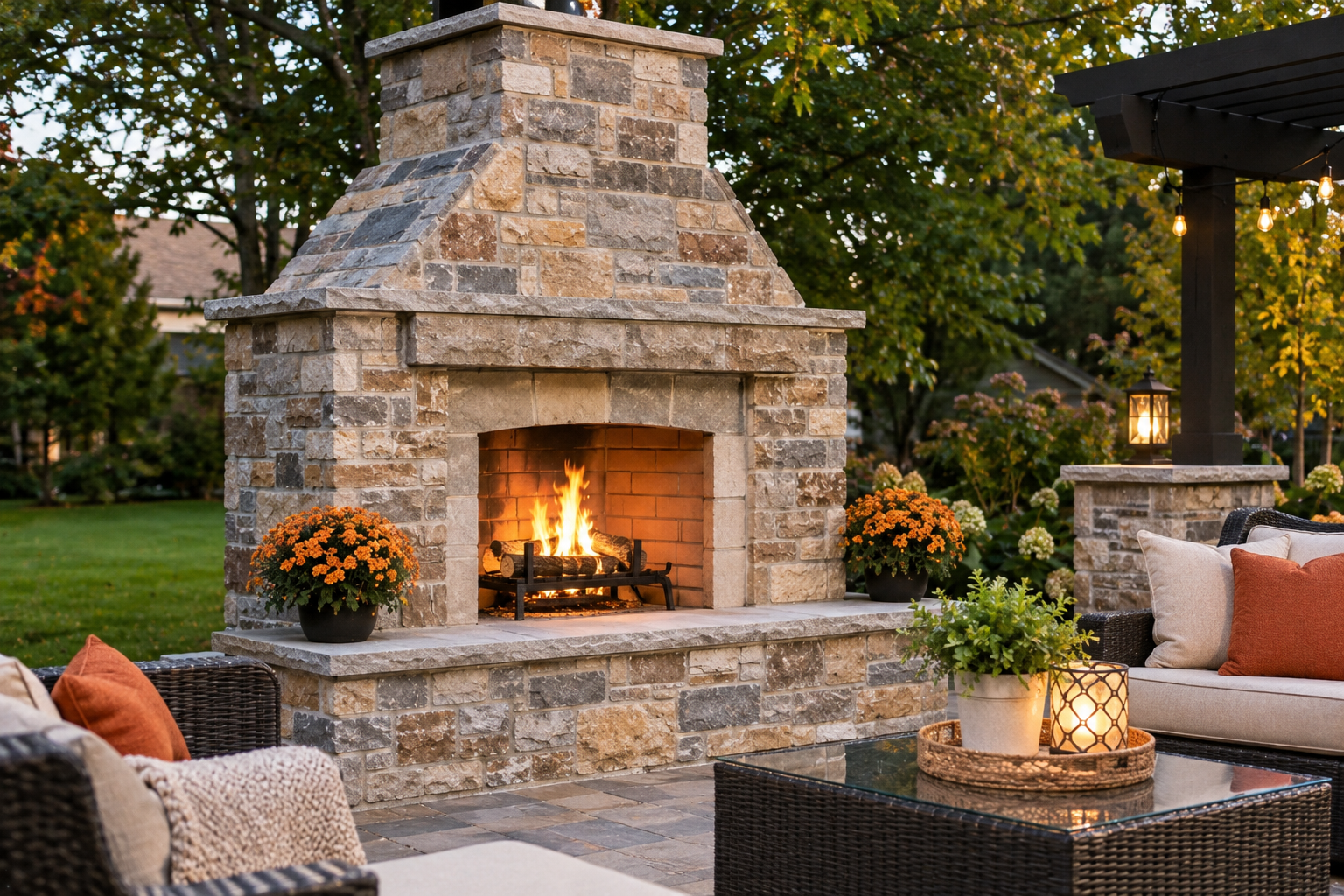
Outdoor fireplaces have become popular features in residential landscaping, creating comfortable spaces where families and friends can gather. Whether constructed from natural stone, brick, or manufactured masonry materials, these features can add character, warmth, and functionality to a backyard.
However, outdoor fireplaces face a combination of challenges that ordinary landscape walls may not experience. Along with exposure to rain, snow, and freezing temperatures, they must also withstand heat generated during use.
For homeowners throughout Ottawa, Kanata, Stittsville, Orléans, Manotick, Rockland, Arnprior, Kemptville, Brockville, and surrounding Eastern Ontario communities, maintaining outdoor fireplace masonry is important for protecting the structure’s appearance, durability, and safe operation.
At One Cut Brick & Stone, we understand that quality masonry requires appropriate materials, proper construction, and regular maintenance. Recognizing early signs of deterioration can help homeowners address problems before more extensive repairs become necessary.
Why Outdoor Fireplaces Need Special Attention
Unlike decorative garden walls or ordinary stone features, outdoor fireplaces experience both weather exposure and high temperatures.
Depending on their design, they may contain:
- Exterior brick or stone
- Fire-resistant interior materials
- Mortar joints
- A firebox
- A chimney or venting system
- Protective caps or coping
Each component performs a different function.
The materials directly exposed to flames must be suitable for high-temperature applications, while the exterior masonry must withstand changing outdoor conditions.
Proper construction and maintenance help these components work together.
Heat and Weather Create Different Types of Stress
Outdoor fireplaces experience temperature changes from two sources.
The first is normal seasonal weather. The second is the heat generated during operation.
Repeated heating and cooling can contribute to expansion and contraction in fireplace materials.
At the same time, rain and snow may expose exterior joints to moisture.
When masonry is already cracked or deteriorated, these conditions can contribute to further damage.
Homeowners throughout Ottawa, Kanata, and Stittsville should pay attention to both interior firebox conditions and exterior masonry surfaces.
Cracked Mortar Should Be Evaluated
Mortar joints help hold masonry units together and contribute to the structure’s stability.
Over time, joints may become:
- Cracked
- Recessed
- Loose
- Crumbling
- Partially missing
The appropriate repair depends on where the deterioration occurs.
Mortar used inside a firebox must be suitable for the temperatures and materials involved. Ordinary exterior masonry mortar should not automatically be used in areas exposed to direct flame.
Professional assessment helps determine the correct repair approach.
Why Firebox Materials Matter
The firebox is the area where the fire burns.
Because this area experiences intense heat, it generally requires materials designed for that environment.
Using unsuitable brick or mortar can lead to premature deterioration.
Homeowners should watch for:
- Cracked firebrick
- Loose interior units
- Deteriorated joints
- Pieces breaking away
- Significant surface damage
A damaged firebox should be inspected before the fireplace is used again.
Moisture Can Damage Exterior Masonry
Outdoor fireplaces remain exposed to weather even when they are not in use.
Rainwater may enter through:
- Cracked mortar joints
- Damaged caps
- Openings in the masonry
- Deteriorated chimney components
Persistent moisture can contribute to staining, spalling, and joint deterioration.
For properties throughout Orléans, Manotick, and Rockland, effective water management is an important part of outdoor fireplace maintenance.
Freeze-Thaw Cycles Can Worsen Existing Cracks
Eastern Ontario winters create demanding conditions for exterior masonry.
When moisture enters cracks and freezes, expansion can place additional stress on weakened materials.
Repeated cycles may contribute to:
- Larger cracks
- Loose stone
- Brick spalling
- Mortar failure
- Surface deterioration
Repairing vulnerable areas before extensive damage develops can help preserve more of the original masonry.
Fireplace Caps Help Manage Water
Some outdoor fireplace designs include chimney caps, crowns, or protective coping.
These components help limit direct moisture exposure and direct water away from vulnerable masonry areas.
Homeowners should watch for:
- Cracked caps
- Loose stones
- Failed joints
- Visible separation
A damaged upper surface may allow water to penetrate the structure below.
Professional repair can help restore the intended protective function.
Natural Stone Fireplaces Need Proper Joint Maintenance
Natural stone is frequently used for outdoor fireplaces because of its appearance and versatility.
However, stone installations still depend on appropriate construction and joint maintenance.
When mortar deteriorates, individual stones may become loose.
Professional restoration may involve:
- Removing failed mortar
- Resetting unstable stones
- Replacing damaged units
- Restoring suitable joints
The repair should reflect the original construction and the temperatures the materials may encounter.
Watch for Loose or Shifting Masonry
Loose masonry around an outdoor fireplace should never be ignored.
Movement may indicate deterioration in the joints, supporting structure, or surrounding materials.
Potential warning signs include:
- Stones moving when touched
- Widening cracks
- Separation between sections
- Leaning masonry
- Detached decorative elements
If significant movement is visible, homeowners should stop using the fireplace until it has been assessed.
Proper Drainage Around the Base Matters
The area surrounding an outdoor fireplace also deserves attention.
Poor drainage may allow water to collect near the base, potentially contributing to settlement or deterioration.
Homeowners should check whether:
- Patio surfaces direct water appropriately
- Soil slopes toward the structure
- Water pools after rainfall
- Nearby landscaping traps moisture
A stable supporting base is important for long-term masonry performance.
Outdoor Fireplaces Should Complement the Patio
A professionally designed outdoor fireplace can become a focal point within a larger landscape.
It may be incorporated with:
- Interlock patios
- Natural stone walkways
- Seating walls
- Garden features
- Retaining walls
The surrounding hardscape should provide stable walking surfaces and appropriate clearances.
Fireplace placement and construction must also comply with applicable local requirements, including fire safety and permitted outdoor burning rules.
Cleaning Should Be Done Carefully
Outdoor masonry can accumulate soot, dirt, and environmental staining.
However, aggressive cleaning methods may damage certain stone surfaces or mortar joints.
Homeowners should avoid using unsuitable chemicals or excessive pressure without understanding the materials involved.
Cleaning methods should be selected according to the masonry type and condition.
Soot buildup and venting concerns may also require inspection by an appropriate fireplace or chimney professional.
Why Professional Repairs Are Important
Outdoor fireplace masonry repairs require consideration of both structural performance and heat exposure.
A repair that works on an ordinary garden wall may not be suitable inside a fireplace.
Professional evaluation should consider:
- Firebox materials
- Exterior masonry condition
- Mortar compatibility
- Structural stability
- Water exposure
- Venting and fire safety
Specialist inspection may be required for firebox, chimney, or combustion-related concerns.
Maintaining Outdoor Fireplaces Through the Seasons
Regular maintenance can help homeowners identify developing problems.
Useful practices include:
- Inspecting visible mortar joints
- Checking for loose stones
- Monitoring cracks
- Keeping surrounding drainage clear
- Removing accumulated debris
- Checking protective caps
- Arranging professional inspection when damage appears
Before using a fireplace after a long period of inactivity, homeowners should make sure it is in safe operating condition.
When Should Homeowners Arrange Repairs?
Professional attention is recommended when an outdoor fireplace develops:
- Significant cracks
- Loose masonry
- Damaged firebrick
- Deteriorated joints
- Visible leaning
- Repeated water staining
- Unstable caps
Addressing deterioration early may help prevent a localized issue from becoming a larger restoration project.
Final Thoughts
Outdoor fireplaces combine attractive masonry with practical outdoor living, but they require appropriate maintenance to remain durable and safe.
Heat exposure, moisture, freeze-thaw cycles, and aging materials can all contribute to deterioration over time.
For homeowners throughout Ottawa, Kanata, Stittsville, Orléans, Manotick, Rockland, Arnprior, Kemptville, Brockville, and surrounding Eastern Ontario communities, regular inspections and timely masonry repairs can help preserve the appearance and performance of these outdoor features.
The most effective approach is to identify deterioration early, use materials suited to the application, and address underlying moisture or stability concerns before they become more extensive.
Professional Outdoor Stonework and Masonry Restoration in Ottawa
At One Cut Brick & Stone, we provide professional exterior masonry services throughout Ottawa and surrounding Eastern Ontario communities.
Our services include natural stonework, brick restoration, repointing, masonry repair, retaining walls, masonry steps, interlock patios, walkways, chimney masonry, parging, and foundation masonry.
If your outdoor stone or brick features show cracking, loose masonry, deteriorated joints, or weather-related damage, our team can assess the condition and recommend appropriate restoration solutions. Fireplace-specific heat, venting, and combustion concerns should also be evaluated by suitably qualified specialists.
Phone: (613) 212-5995
Email: info@onecutbrickandstone.com
Contact One Cut Brick & Stone today to schedule a professional masonry consultation and help preserve the beauty, durability, and long-term value of your outdoor masonry features.