
Windows are important architectural features that provide natural light, ventilation, and character to a home. However, the masonry surrounding these openings depends on properly functioning support components to remain stable.
One important component is the window lintel.
A lintel is a structural element installed above an opening to support the weight of the masonry or other loads above it. Depending on the building’s design, lintels may be constructed from steel, reinforced concrete, stone, or other suitable materials.
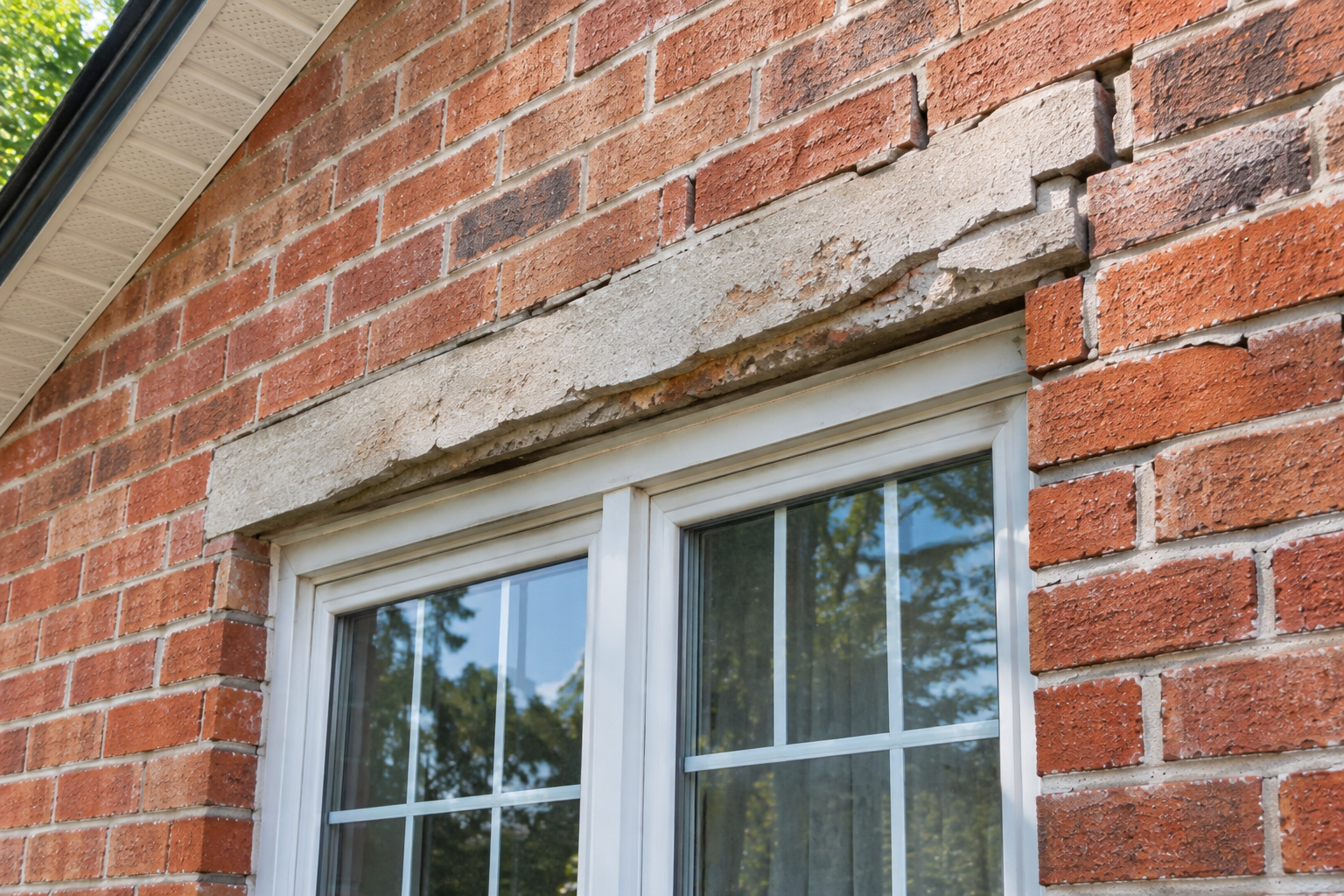
When lintels begin deteriorating, homeowners may notice cracks above windows, rust staining, displaced bricks, or visible separation in the surrounding mortar.
For homeowners throughout Ottawa, Kanata, Stittsville, Orléans, Manotick, Rockland, Arnprior, Kemptville, Brockville, and surrounding Eastern Ontario communities, recognizing these warning signs early can help protect exterior masonry and prevent more extensive repairs.
At One Cut Brick & Stone, we believe proper masonry restoration starts with identifying the underlying problem. Damaged brickwork above a window should be assessed carefully before deciding whether repointing, brick replacement, or structural lintel repair is necessary.
What Is a Masonry Window Lintel?
A lintel is a horizontal structural component positioned above a window or other opening.
Its purpose is to support loads above the opening and transfer them to the surrounding structure.
Lintels are commonly found above:
- Windows
- Doors
- Garage openings
- Other masonry wall openings
The appropriate lintel material and design depend on the construction of the building.
When the lintel performs properly, the surrounding masonry remains supported.
However, deterioration or movement can affect the brickwork above the opening.
Why Do Window Lintels Deteriorate?
Several conditions can contribute to lintel problems.
Common factors include:
- Moisture infiltration
- Corrosion of steel components
- Aging materials
- Improper drainage
- Structural movement
- Previous construction deficiencies
- Long-term weather exposure
The cause depends on the building’s age, materials, and construction details.
Professional evaluation helps determine whether the problem is limited to surrounding mortar or involves the supporting lintel itself.
Rusting Steel Lintels Can Damage Brickwork
Steel lintels are commonly used in certain masonry construction systems.
When steel remains exposed to moisture, corrosion may develop.
Rust occupies more volume than the original steel, potentially placing pressure on the surrounding masonry.
Over time, homeowners may notice:
- Horizontal cracks
- Rust staining
- Displaced bricks
- Open mortar joints
- Deterioration near the lintel
For properties throughout Ottawa, Kanata, and Stittsville, these warning signs should be investigated before damage becomes more extensive.
Cracks Above Windows Should Not Be Ignored
Cracking above a window does not automatically mean the lintel has failed.
However, certain patterns can indicate that the supporting masonry or structural components require attention.
Common warning signs include:
- Horizontal cracks immediately above the opening
- Stair-step cracking near upper corners
- Separation between brick courses
- Repeated mortar failure
- Visible displacement
The location, size, and progression of cracks help determine the appropriate next steps.
If cracking is accompanied by sagging or loose masonry, professional assessment should be arranged promptly.
Why Moisture Is a Major Concern
Water can enter masonry through deteriorated joints, cracks, damaged flashing, or other building-envelope defects.
When moisture reaches vulnerable components, it may contribute to corrosion and material deterioration.
Repeated exposure can affect both the lintel and surrounding brickwork.
For homeowners throughout Orléans, Manotick, and Rockland, proper water management is an important part of maintaining exterior masonry.
Repairing damaged bricks without addressing the source of moisture may allow deterioration to continue.
Ottawa’s Freeze-Thaw Cycles Can Worsen Existing Damage
Eastern Ontario experiences frequent temperature changes during colder months.
When moisture enters cracks or mortar joints, freezing conditions can place additional stress on weakened materials.
Repeated freeze-thaw cycles may contribute to:
- Larger cracks
- Brick spalling
- Loose mortar
- Surface deterioration
- Worsening separation
Although freezing conditions do not cause every lintel problem, they can accelerate existing masonry damage.
Rust Staining Is an Important Warning Sign
Brown or orange staining near a window opening may indicate corrosion of an embedded metal component.
However, staining can have different causes.
Homeowners should avoid assuming that every rust-coloured mark confirms lintel failure.
When staining appears alongside cracking or displaced brick, professional evaluation is particularly important.
The assessment should consider the lintel, surrounding masonry, flashing, and moisture conditions.
When Is Repointing Enough?
Repointing involves removing deteriorated mortar and replacing it with compatible new material.
It may be appropriate when mortar joints have deteriorated but the lintel and surrounding masonry remain stable.
However, repointing alone cannot correct a lintel that has significantly corroded, shifted, or lost its ability to provide adequate support.
The underlying condition must be addressed before cosmetic restoration.
This distinction helps homeowners avoid repeated repairs that fail to solve the actual problem.
When Might Lintel Replacement Be Necessary?
Lintel replacement may be considered when the existing component has deteriorated significantly or no longer provides adequate support.
Warning signs can include:
- Extensive corrosion
- Significant masonry displacement
- Visible deformation
- Recurring cracking
- Loose brickwork above the opening
Because lintels are structural components, repair or replacement should follow an appropriate assessment and, where required, engineering design.
Temporary support and proper construction procedures may be necessary during replacement.
Homeowners should not attempt to remove a lintel or supporting masonry themselves.
Brick Restoration May Be Needed After Lintel Repair
When a lintel is repaired or replaced, surrounding brickwork may also require restoration.
This can involve:
- Replacing damaged bricks
- Restoring mortar joints
- Correcting displaced masonry
- Addressing moisture-management details
Professional masonry restoration should aim to preserve sound existing materials while ensuring the repaired area functions properly.
The final appearance is also important because window openings are prominent features of the home’s exterior.
Matching Brick and Mortar Preserves Curb Appeal
Older homes may contain brick colours, textures, and dimensions that are difficult to match exactly.
For established properties throughout Ottawa, Arnprior, and Brockville, careful material selection can help maintain architectural character.
Professionals consider:
- Brick size
- Colour variation
- Texture
- Mortar compatibility
- Joint profile
A well-planned repair should complement the surrounding façade rather than creating an obvious patch.
Window Flashing and Drainage Matter
A lintel repair should not focus exclusively on the structural component.
Water-management details around the window are also important.
Depending on the wall system, these may include flashing, drainage openings, and appropriate transitions between materials.
If moisture continues entering the same area after repair, deterioration may return.
A comprehensive assessment helps identify conditions that should be corrected as part of the restoration.
Why Older Homes Require Special Attention
Buildings constructed decades ago may contain different lintel materials and masonry arrangements from modern homes.
Some older properties may have:
- Stone lintels
- Steel supports
- Traditional brick assemblies
- Previous repairs
- Aging mortar
Understanding the original construction is important when selecting repair methods.
For homes throughout Kemptville, Brockville, and surrounding Eastern Ontario communities, material compatibility and proper structural assessment can help protect existing masonry.
How Homeowners Can Monitor Window Lintel Conditions
Homeowners can include the areas above exterior windows in regular property inspections.
Look for:
- New cracks
- Rust staining
- Crumbling mortar
- Loose bricks
- Changes in alignment
- Water staining
Photographs can help document visible changes over time.
However, rapidly developing cracks, sagging masonry, or loose materials should be evaluated promptly rather than simply monitored.
Why Professional Assessment Matters
Lintel problems can resemble ordinary mortar deterioration.
Without proper investigation, homeowners may invest in repeated surface repairs while the underlying support continues deteriorating.
Professional assessment helps determine whether the condition involves:
- Mortar maintenance
- Brick replacement
- Moisture management
- Structural lintel repair
- More extensive masonry restoration
When structural concerns are identified, an appropriately qualified engineer may need to evaluate the support system and specify the necessary work.
Final Thoughts
Window lintels are essential structural components that help support masonry above openings.
Although they are often overlooked, deterioration can become visible through cracking, rust staining, loose brickwork, and changes in wall alignment.
For homeowners throughout Ottawa, Kanata, Stittsville, Orléans, Manotick, Rockland, Arnprior, Kemptville, Brockville, and surrounding Eastern Ontario communities, recognizing these warning signs early can help prevent unnecessary masonry deterioration.
The correct repair depends on identifying the cause, assessing the supporting component, and restoring surrounding masonry with suitable materials and professional workmanship.
Addressing lintel concerns properly helps preserve the safety, appearance, and long-term performance of exterior brickwork.
Professional Brick and Masonry Restoration in Ottawa
At One Cut Brick & Stone, we provide professional exterior masonry services throughout Ottawa and surrounding Eastern Ontario communities.
Our services include brick repair, brick replacement, repointing, masonry restoration, chimney repair, natural stonework, retaining walls, masonry steps, interlock patios, walkways, parging, and foundation masonry.
Whether your property has cracked brickwork above windows, deteriorated mortar, rust staining, or other visible masonry concerns, our team can assess the condition and help determine appropriate restoration options, including specialist structural evaluation when necessary.
Phone: (613) 212-5995
Email: info@onecutbrickandstone.com
Contact One Cut Brick & Stone today to schedule a professional masonry consultation. Let us help preserve the appearance, durability, and long-term value of your home’s exterior.